


Switching to the best VALORANT sensitivity and DPI settings won’t make you an aim demon overnight, but here’s the truth—finding the right mouse sensitivity and eDPI for my playstyle made a huge difference almost instantly. And it could be the same for you too.
If you’ve been struggling to hit those crispy headshots, I’ll show you how to fine-tune your DPI, eDPI, and aim sensitivity in VALORANT to boost your mechanics in this guide.
Table of contents
In a nutshell
- Choose your VALORANT sensitivity and DPI settings according to your playstyle.
- Aim sensitivity, DPI, and eDPI are crucial factors in choosing your settings correctly.
- High eDPI lets you master movement, while low eDPI stabilizes your aim.
- Use sensitivity tools and the Practice Range to determine the right sensitivity and DPI settings for you.
- Refer to your favorite pros and their choices.
Why sensitivity and DPI settings are important in VALORANT
In competitive tac shooters like VALORANT, mouse sensitivity plays a crucial role in shaping your mechanics. As you play the game, your mechanics improve—and that’s only possible if you’re comfortable with your sensitivity and DPI settings.
If your sensitivity is too high, you’ll have a hard time accurately clicking on your opponent’s heads. If it’s too low, you’ll struggle to react to an enemy, master certain movement mechanics, or dodge abilities like flashes and trigger traps. The trick is to find the sweet spot, which fits your style and lets you grow.
To find your best VALORANT aim settings, however, you need to know how mouse sensitivity and DPI actually work.
Sensitivity, DPI, and eDPI in VALORANT, explained
To set up your aim settings in VALORANT, you should know three main terms: sensitivity, DPI, and eDPI. Knowing what they mean is the first step to landing the perfect VALORANT settings for you.
Sensitivity
Sensitivity is basically a measure of your in-game aim sensitivity, indicated by the “Sensitivity: Aim” setting under General > Mouse. The value can be anywhere between 0.01 and 10, and changing it only affects the mouse speed in the game—not for your device.
DPI
DPI stands for Dots Per Inch. It dictates the speed at which your mouse cursor moves on your screen and applies to everything you do on your computer, from browsing the internet to playing a game. Most mice come with dedicated buttons and software that let you change DPI settings precisely and with ease.
eDPI
eDPI stands for Effective Dots Per Inch. You can calculate it by multiplying the sensitivity by the DPI. It determines your effective in-game sensitivity, meaning the speed at which your crosshair will move in VALORANT after considering your DPI and aim sensitivity.
Scoped and ADS sensitivity multipliers
Scoped sensitivity refers to the effective sensitivity when you use sniper rifles like Marshal, Outlaw, Operator, and Chamber’s Operator with their scoped view. ADS sensitivity is for every other weapon when used with ADS (aim down sight).
Now that you know the basics, let’s jump into the best VALORANT sensitivity and DPI settings, shall we?
Best sensitivity and DPI settings for VALORANT
The best VALORANT aim settings mostly depend on your playstyle, the agents you main, the weapons you wield, and also your preferred firing pattern.
If you’re starting out and are looking for a general recommendation for the best beginner-friendly sensitivity and DPI settings, I’d say, start with 0.35 as aim sensitivity and 800 as DPI, which equals to 280 eDPI. This combo nurtures a stable aim without impairing your movement, making it the best choice for most players in the current meta.
The general rule of thumb has always been to maintain an eDPI of around 300 or lower for stable aim and movement. But with recent updates to weapons and the rise of the “blink and miss” agent meta (like the mosquito comp), it’s worth experimenting with a slightly higher eDPI. If you have already trained your aim to remain stable under most conditions and want to try the high sensitivity meta, go for the 0.4 aim sensitivity and 800 DPI combo.
As for ADS and scope sensitivity multipliers, most players (including myself) set both of these settings to one. This ensures a uniform aiming experience for you across weapons.
High or low sensitivity: What should you choose?

High sensitivity allows you to react to enemies and their utility quickly. On the other hand, lower sensitivity gives more control and precision. You must find a balance between the two, depending on the agents you play, the guns you prefer, and your mechanical skill.
If you have limited space on your desk or a small mousepad, bump up your sensitivity to compensate. Feel free to experiment with a lower sensitivity if you have plenty of space. As a rule of thumb, you should be able to do a 180-degree turn with your mouse in one movement.
High sensitivity
Higher sensitivity is great for duelists and entry-fragging agents. You must be quick to react when entering a site to check for enemy positions and create space for your team. Agents that usually adopt the spray-and-pray style with an Odin or a Phantom benefit from higher sensitivity, too.
Agents like Jett, Yoru, Neon, and Raze thrive on unpredictable movement mechanics and cater to higher sensitivities. You’ll need to satchel, dash, and teleport into sites and engage in close-quarter fights, and may be required to land flick shots frequently. Lower sensitivity doesn’t allow you to move that freely.
Low sensitivity
Lower sensitivity is better if you play a more defensive and stationary role, like sentinel or controller. Agents like Killjoy, Viper, and Brimstone often support their teams with utility and hold a dedicated line or an angle.
Lower sensitivity also gives you more control when using weapons like the Vandal, which relies on precise headshots to be the most effective. With enough mouse space on your desk, you can be as effective in the match as if you were using a higher sensitivity, but with added precision and accuracy.
How to find your perfect VALORANT sensitivity
Practice in the range
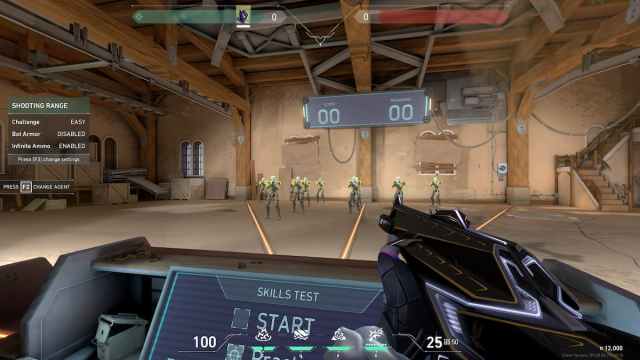
Finding your perfect sensitivity takes time, as you must develop muscle memory by playing the game and monitoring your performance. Load up into the training range and shoot bots for 5 to 10 minutes after setting a new sensitivity to see if it suits you. Alternatively, play a couple of deathmatch games to see how well you fare in heated engagements.
When playing, identify if you’re over-flicking or under-flicking when moving the crosshair towards the enemy. Constant over-flicking means you might want to lower your sensitivity, while under-flicking means you want to increase your sensitivity.
Use AimLabs sensitivity tool
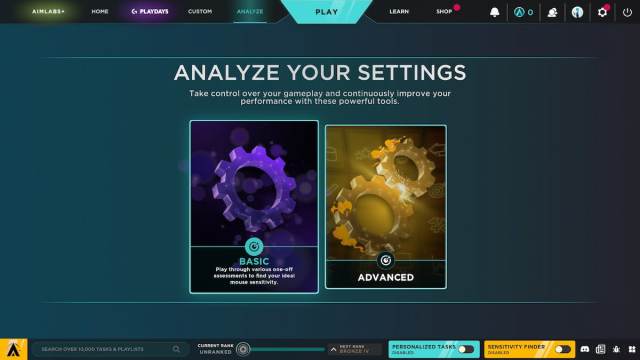
AimLabs is a great tool to practice your aim in FPS games, but it also offers modes for you to tailor your sensitivity. While there are paid tools to find the perfect sensitivity, a free one is enough to get you started. Install AimLabs and head to the Analyze tab, where you can find the Basic assessment.
Enter your DPI and complete a series of tasks. AimLabs will give you the same tasks on different sensitivities and monitor your performance to find the one that suits you best. You can then use it as a baseline and adjust it as you play VALORANT.
Dot Esports’ VALORANT DPI and sensitivity settings recommendation
Here’s my list of recommended DPI and aim sensitivity settings that you can use in VALORANT.
| Aim sensitivity | DPI | eDPI | Scoped Sensitivity | ADS Sensitivity | Best for? |
|---|---|---|---|---|---|
| 0.40 | 800 | 320 | 1 | 1 | Movement agents (Neon, Waylay, etc.), veterans looking to adapt to the speed meta |
| 0.35 | 800 | 280 | 1 | 1 | [Best Overall] Beginners focusing on stabilizing their aim, grounded agents, Vandal users, tap firing |
| 0.18 | 1600 | 288 | 1 | 1 | For some players, choosing higher DPI and lower in-game sensitivity may reduce input lag. |
| 0.30 | 800 | 240 | 1 | 1 | For players who want to focus only on their aim. This turned out to be the best for my playstyle so far. |
| 0.45 | 800 | 360 | 1 | 1 | For players who can take advantage of high eDPI without it messing up their aim. |
I use a wireless gaming mouse and have plenty of space on my desk. This allows me to lower my sensitivity without giving up on movement. 800 and 0.30 is generally the DPI and sensitivity I go for. But feel free to treat these settings as a reference and tweak according to your comfort.
Don’t change your VALORANT sensitivity too often. I sometimes bump mine up or down after going on a frustrating loss streak—many players do. But this is exactly what you’d want to avoid. Changing your aim settings will throw you off your muscle memory, often doing more harm than good. Instead, stick to the settings you’ve been practicing with. Just because you’re having a bad aim day doesn’t mean your sensitivity is wrong.
Pro VALORANT DPI and sensitivity settings
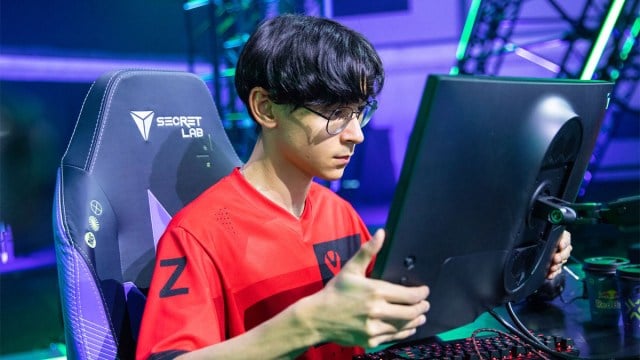
Of course, pros know it best, so I get that you’d like to take it from them. Since it depends largely on playstyle, most VALORANT pros have starkly different sensitivity preferences from each other. Interestingly, while many pros have shifted to ridiculously high eDPIs over time, most of them still prefer to stick to a low eDPI—even ones maining Neon and Waylay.
Here are some notable examples of sensitivity preferences from the esports scene:
| Player | Sensetivity | DPI | eDPI |
|---|---|---|---|
| TenZ | 0.173 | 1,600 | 276.8 |
| Demon1 | 0.1 | 1,600 | 160 |
| Aspas | 0.4 | 800 | 320 |
| something | 0.45 | 800 | 360 |
| mada | 0.37 | 800 | 296 |
| Chronicle | 0.125 | 1600 | 200 |
| Kaajak | 0.1 | 1600 | 160 |
| nAts | 0.49 | 800 | 392 |
| Jinggg | 0.245 | 1,600 | 392 |
| Zekken | 0.175 | 1,600 | 280 |
| f0rsakeN | 0.645 | 800 | 516 |
| Cryocells | 0.16 | 800 | 128 |
| Derke | 0.74 | 400 | 296 |
FAQs
Q1: What’s the best VALORANT sensitivity and DPI for beginners?
Start out with 0.35 as aim sensitivity in-game and 800 as DPI. It’s neither too low nor too high, making it the perfect place to begin. Feel free to tweak as you play VALORANT and discover what’s working for you.
Q2: Low or high sensitivity?
It depends on your playstyle. Lower eDPI stabilizes your aim and is preferred by most players and pros, even in 2025. But higher eDPI lets you flick harder, move faster, and react quicker. It’s also great for players short on tracking space or who don’t own a responsive modern mouse.
Q3: Should I go for low DPI and high in-game sensitivity or high DPI and low in-game sensitivity?
A popular theory suggests that the combination of high DPI and low in-game sensitivity reduces input lag and makes gameplay appear less choppy for some players. But the truth is: The difference is negligible. Most players prefer sticking to 800 DPI, and choosing 1600 DPI won’t give you a competitive benefit over them. As for what you should choose, go for whatever makes you comfortable and gives you better aim.
Q4: What is the best way to find my VALORANT sensitivity?
First, choose a DPI and sensitivity to test. Load up the Practice Range or queue for a Deathmatch. As you aim for an enemy’s hitbox with your usual flick, notice if your crosshair is moving further than the target (over-flicking) or not reaching the target (under-flicking). If it’s over-flicking, reduce your in-game aim sensitivity. If it’s under-flicking, increase your sensitivity.
Q5: Should I copy sensitivity settings?
You can use another player’s settings as a reference, but remember that everyone’s preferences are different. Start with ours, a friend’s, or a pro’s setup, and adjust it to suit your playstyle.
Q6: Which pros have the best VALORANT sensitivity settings?
You can switch to TenZ’s settings to keep it balanced between speed and aim. If you’re looking for the best high sensitivity settings, Aspas and something’s settings are good points of reference. If you want to keep it low, you can go for Chronicle’s preference.







Published: Oct 27, 2025 05:04 am