


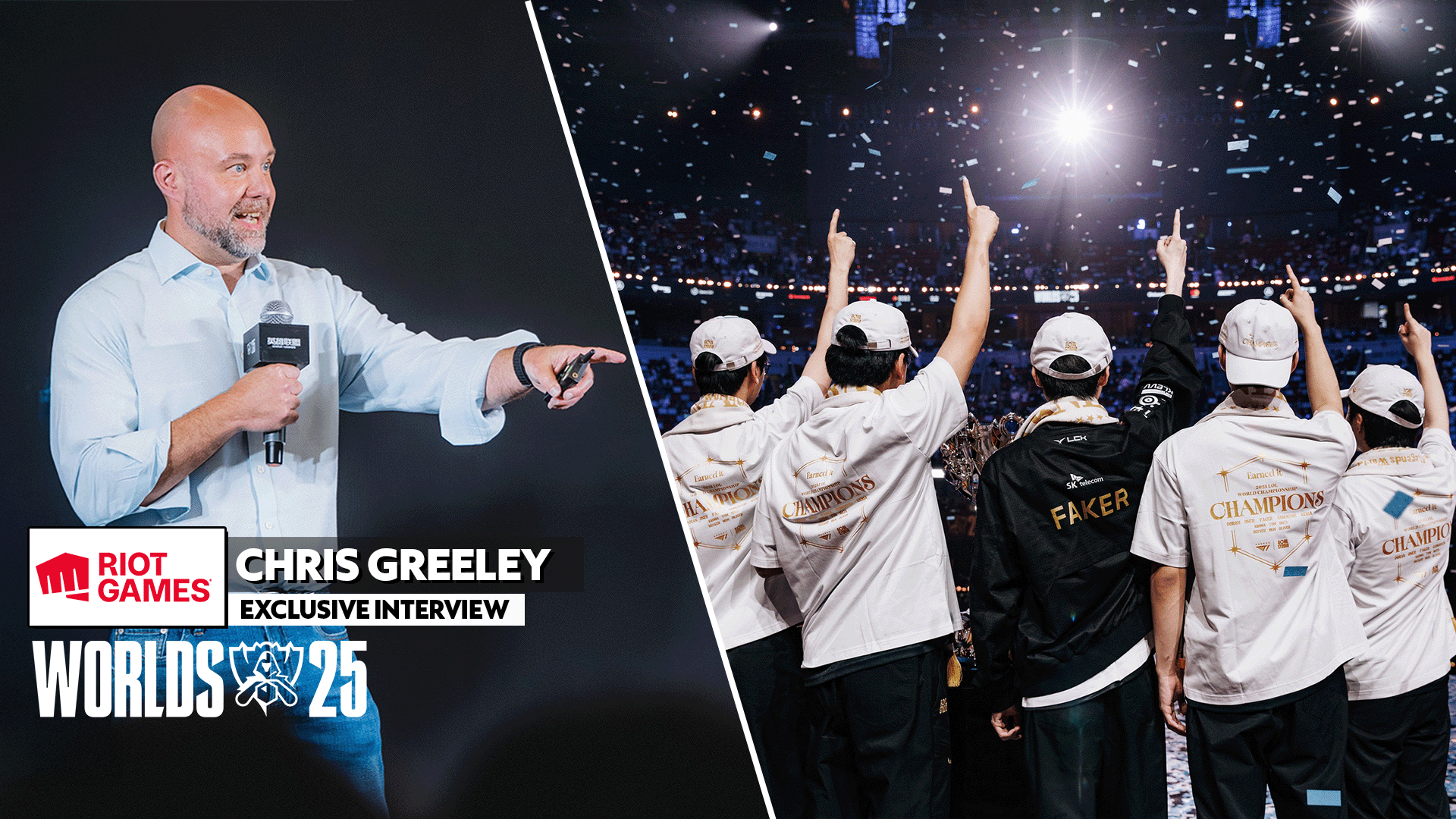

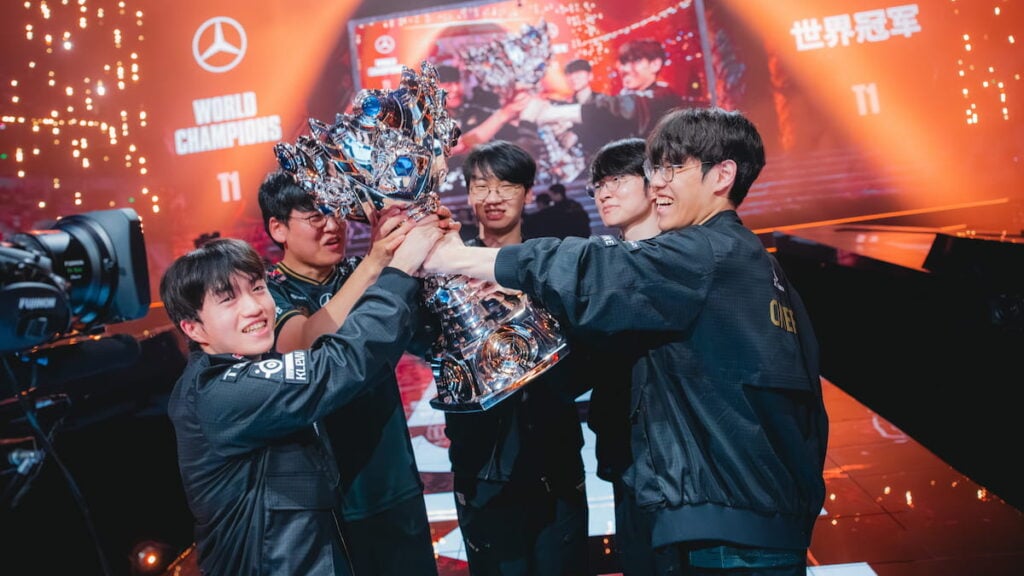
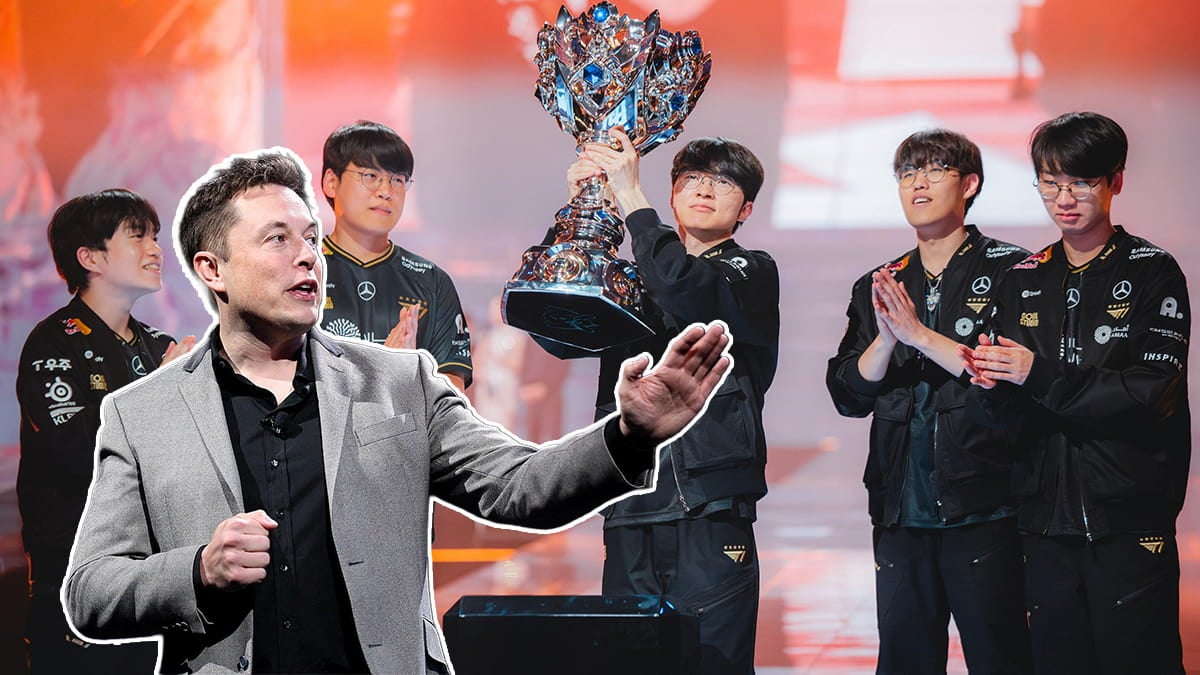
As the League of Legends World Championship 2025 concluded with T1 completing a historic three-peat, the game celebrated 15 years of legacy. Riot Games, the company behind League esports, believes that the long journey can be traced back to a single moment when everything changed.
League of Legends always felt huge to the fans who lived it, but it took one night in Los Angeles to prove it to the rest of the world. “The first Worlds (in the United States) at the Galen Center was a real turning point for esports overall and really for League esports,” said Chris Greeley, Global Head of League esports, in an exclusive interview with Dot Esports.
“For a long time, we really wanted to be validated, for all of the people who were watching, all of the pros who were competing,” Greeley explained. “The folks who played League, the folks who watched League esports, always saw it as something big. But getting some validation from the rest of the world… really helped us take off.”
The biggest esports show must feel local everywhere it goes
Chris Greeley knows the League esports fandom is enormous, but not equally understood in every corner of the world. He has seen firsthand how wildly different the esports culture can be depending on where you are.
“In Korea, esports has always been a thing… Uzi cannot go outside without people mobbing him. Faker is treated like a Hollywood star,” he said, pointing to how Asia embraced esports long before it hit global mainstream.
“The first Worlds (in the United States) at the Galen Center was a real turning point for esports overall and really for League esports.”
Chris Greeley, Global Head of League esports
But he admits the West was slow to catch on. “I do not think the West is quite caught up. If you tell people in the West that you work in esports, it is like, oh, what is that” he said.
That gap is closing fast thanks to the transition from cable TV to Twitch. Content creators have helped pull gaming into mainstream culture, and Greeley thinks demographics have always been League’s hidden advantage.
“We used to say all the time that esports can only grow because a lot of our fans were just being born,” added Greeley.
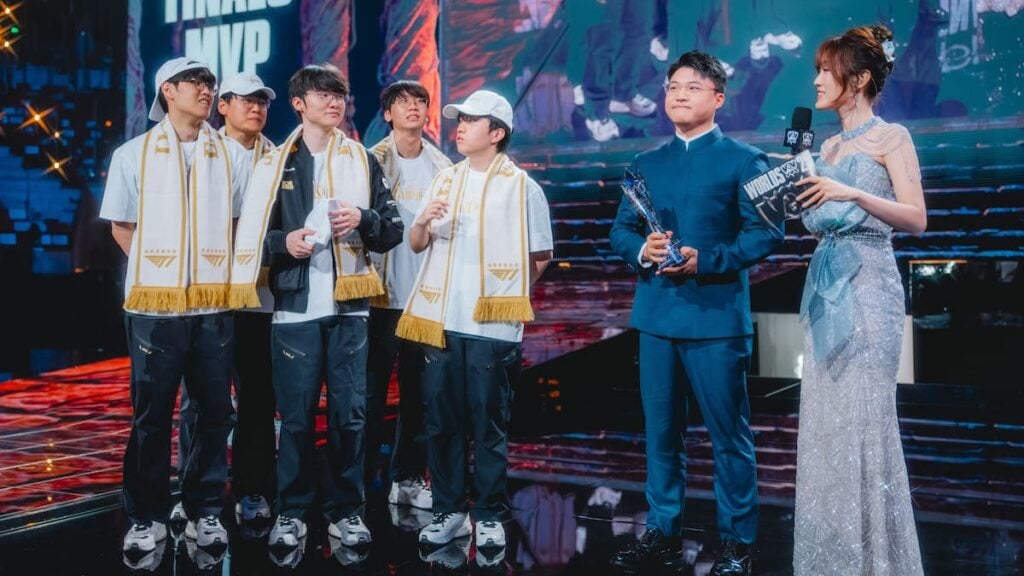
That growing global audience means Worlds every year needs to feel like a local celebration, no matter where it goes. Riot broadcasts every show in multiple languages and does not just translate, it adapts. “You really want to work with partners who understand the local market and what is going to resonate,” Greeley said.
To him, the Mandarin and English broadcasts in Shanghai for the Worlds 2025 felt like completely “different vibes”, each tuned to its fans. “We try to tailor those broadcasts for the audience and what the audience expects and what is normal in that market,” he said.
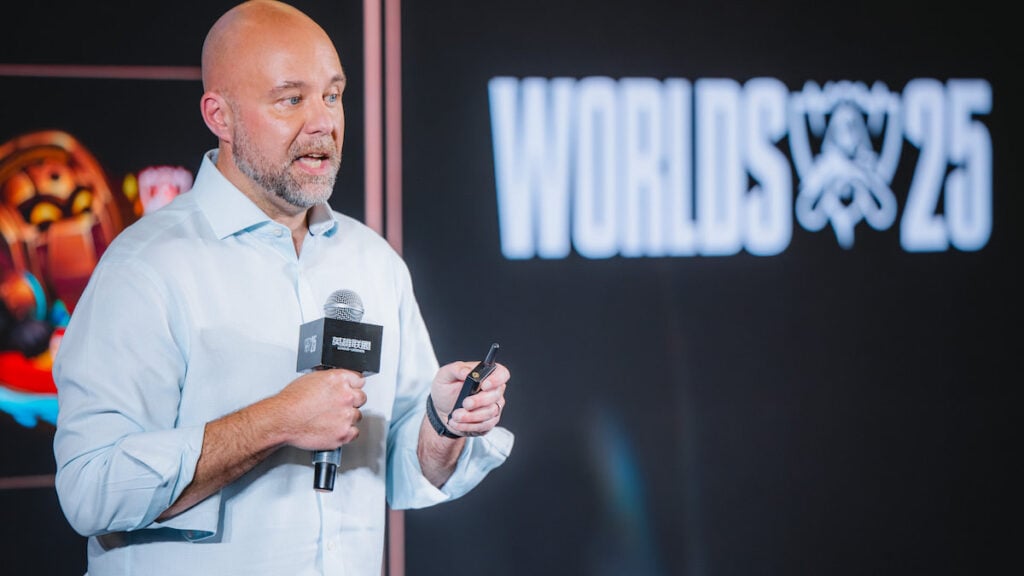
Worlds has become more than a tournament. It is a global spectacle designed to impress even viewers who do not normally follow League esports. Greeley admitted he might be biased, but he believes “it is the biggest event in esports” and that success comes from making the experience feel personal to every audience.
“Not everything is going to feel perfect for everyone,” he said, explaining that the focus is on giving fans something to connect with whether it is a music video, a Worlds anthem, or something entirely different.
Keeping Worlds unforgettable takes constant innovation
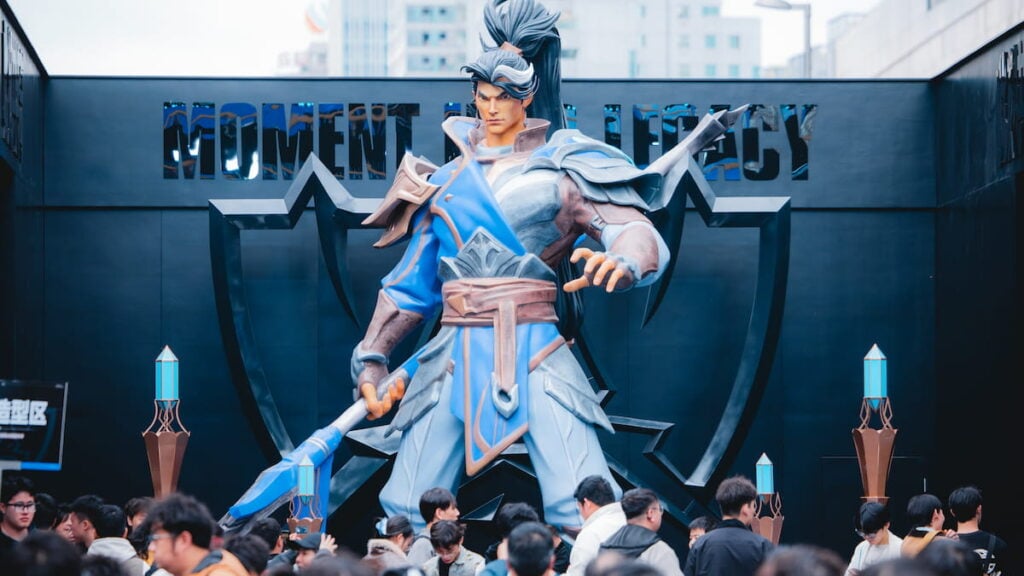
This year in China, Riot doubled down on that spectacle by creating the massive LoL Carnival fan fest in Chengdu, stretching across multiple city blocks with huge activations, including a towering Xin Zhao installation that drew crowds near Chunxi Road. Greeley said the goal was to provide “a really deep and enriching experience” for anyone who traveled to the city, whether they had tickets to the matches or not.
The legacy of the iconic AR dragon from 2017 still looms large, and Riot knows the audience expects something equally jaw-dropping each time. The challenge is finding new ways to “surprise and excite our crowd in person and watching at home”.
Riot wants to take League global, but fan demand sets the map
Expanding Worlds locations outside the major four regions are still limited by practical concerns. Riot cannot host its biggest tournament in places where interest is not strong enough to fill seats for a month straight, especially on regular match days. “You really do need a large fan base where you are going,” Greeley said, balancing global ambition with reality.
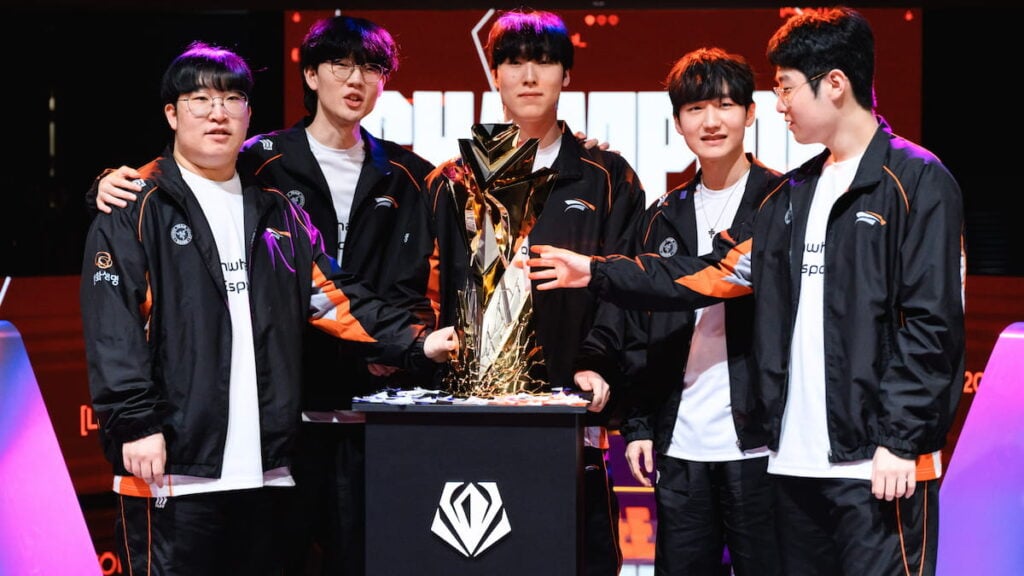
Riot sees opportunity in regions where League is just beginning to take hold.
“I think there are a lot of opportunities for us to go into developing areas and developing markets that are like just sort of turning their attention to League and finding the IP,” Greeley said.
“Through things like First Stand (Brazil in 2026), where I think we have tried to be a little bit more experimental in where we have gone, and we are going to continue to be.”
Apart from that, there are LEC Roadshows that took place in 2025, which also work on taking League to fans in different parts of Europe.
League’s Tier-2 needs support, and Riot is finally working on it
“Tier 2 is an area that we have not quite figured out yet,” Greeley admitted. “I certainly cannot say that tier 2 feels sustainable for the teams and pros who are at that level,” he said.
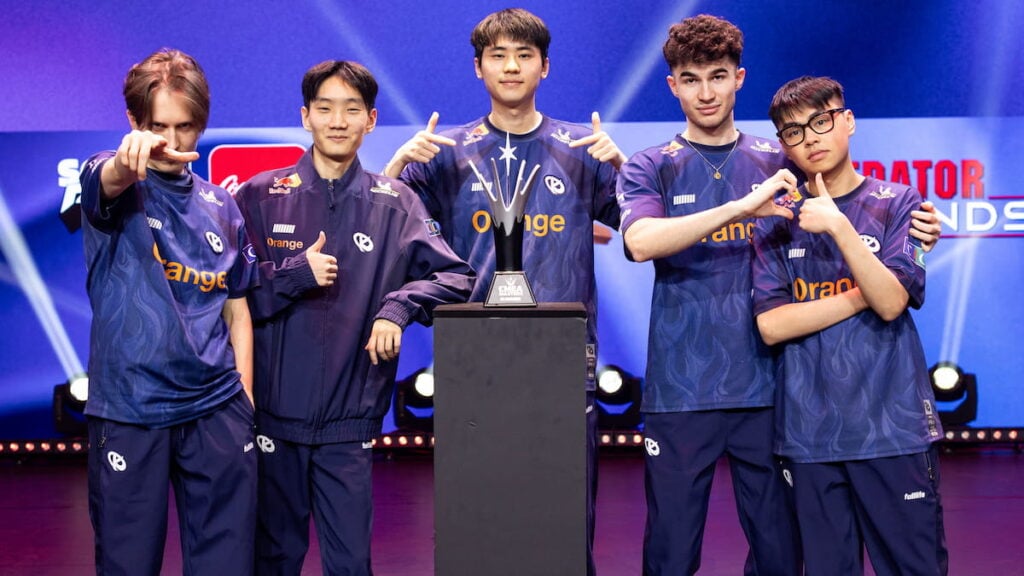
For all the global reach and arena-sized success at the top of League esports, the developmental tier beneath it is still on unstable ground. Tier 2 remains the crucial pipeline where tomorrow’s stars should emerge, yet Riot knows it is not currently able to support most pros and teams grinding within it.
“Tier 2 is an area that we have not quite figured out yet. I certainly cannot say that tier 2 feels sustainable for the teams and pros who are at that level.”
Chris Greeley, Global Head of League esports
The modern path to pro play is more structured than it was a decade ago, when solo queue was the only scouting tool. Even so, consistency and support vary across regions.
“It is still not as streamlined as it could be. It is certainly not as streamlined as many conventional sports, and I think it is different in every region,” Greeley explained, noting that there may be fewer total teams, but the opportunities that remain right now are better defined than before.
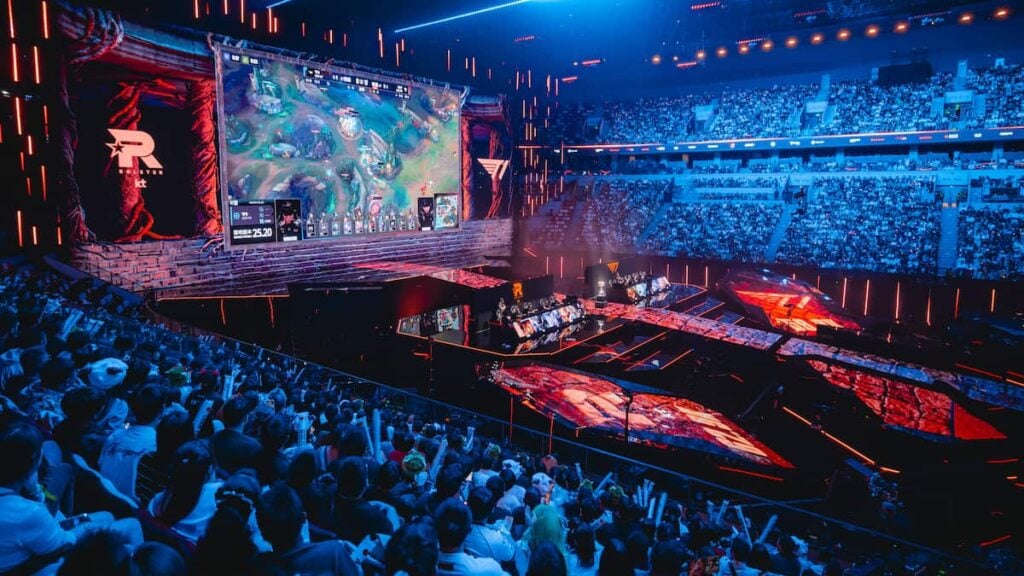
Competitive disparity is now a global concern. If players only face their own region’s talent during development, the gap at Worlds becomes impossible to ignore.
“Part of it is: How do you close the parity gap between the East and West, or really between Korea and everybody else,” Greeley said. At the same time, League has to win the attention of young prodigies choosing where to invest their future. “VALORANT is where we see a lot of folks going,” he added.
Riot’s approach to fixing the pipeline includes commercial change as well. “It’s been really hard to get sponsorship interest at that level. It’s kind of like, I always compare it to the US Minor League Baseball, where there are some very hardcore fans who really want to watch the development of talent, but it’s harder to find investment into that level,” he explained.
“How do you close the parity gap between the East and West, or really between Korea and everybody else. VALORANT is where we see a lot of folks going.”
Chris Greeley, Global Head of League esports
Esports needs money but it cannot come at the cost of trust
With the ecosystem needing more revenue, new sponsorship categories have been opened to support teams and regional leagues. “We have cryptocurrency with Coinbase. We have beer sponsors in many of our regional leagues… We have opened up gambling,” Greeley said. But he emphasized careful consideration of the fanbase’s age.
“You want to open up the economic opportunity… but you want to do it in a responsible way where you are not trying to lead people down the wrong paths,” he explained, sharing an anecdote where Riot only allowed alcohol sponsors once the average LCS viewer age reached 23, which is over the legal drinking age in the United States. If it wasn’t over 23, Greeley responsibly said that Riot would’ve been “a lot less comfortable” to introduce beer sponsors.
“We understand the makeup of our audience. And when you have a lot of people in their mid-20s, late teens watching, you want to open up the economic opportunity for ourselves and for our teams and sponsors,” Greeley explained. “We do have an audience to consider and want to make sure that, ultimately, if fans put their trust in us, that we are not taking advantage of that trust,” he said.
Although sponsorship addresses part of the puzzle, Riot believes the most impactful solution will come through structural evolution. The company is actively exploring a more unified and global developmental environment where rising talent can face tougher competition sooner.
“We understand the makeup of our audience. And when you have a lot of people in their mid-20s, late teens watching, you want to open up the economic opportunity for ourselves and for our teams and sponsors.”
Chris Greeley, Global Head of League esports
“I think we want to look for ways to really create a better area for players, not just from the east, but from the whole world to have a platform to get together, to train against each other and start to develop that way,” Greeley said. “We want that path… to be aspirational.”
“How do we develop a more global tier 2 hub where we can get more developing players into it and maybe raise the profile of tier 2 overall,” he added. Greeley made it clear the process remains ongoing, with Riot still working through internal discussions to bring clarity and long-term stability to tier 2 League esports.
“There are a lot of problems to solve and we just, we do not have a lot of great answers right now, but we’re trying to work through them,” he said.
Preparing League esports for its next decade
Even after 15 years at the top of the esports world, Riot believes there is still a lot of work to do to bring new fans into League’s competitive scene. Greeley acknowledged that League can be intimidating to newcomers and that this remains one of the esports’ biggest growth barriers.
“League Esports tends to be something that is more difficult to watch if you have never played League of Legends,” he said, noting that Riot is increasingly tying narrative and game elements to esports to make the ecosystem more welcoming.
From Noxus to Spirit Blossom in Ionia, music videos, and seasonal cinematics, the goal is to help new players feel just as invested by tying the League IP’s storyline with esports. “Those are the areas where we are going to continue to lean into our strengths and provide amazing experiences for fans,” he said.
That philosophy extends beyond storytelling and into technology as well. Riot wants to lower the friction of being a fan, whether viewers are at home or inside a packed arena.
“It should not be hard to find things,” Greeley said. “You should never miss a weekend of games and then not know that they were on,” he admitted. There is room to improve notifications, mobile engagement, and interactive features that keep fans plugged in during every split. “We have been a little weak in some of those areas… definitely places we are looking,” he added.
The long-term future of esports hinges on something less flashy but even more urgent. “I think over the last couple of years, we’ve seen a lot of consolidation. I think that we’re focused on teams making money. and making sure that the sport’s around in five or 10 years in the same way that it is now,” Greeley explained.
“We have some teams that are seeing profitability. We have others that are not, and the goal is to get everybody there.”
Chris Greeley, Global Head of League esports
“You cannot run a sport if the teams that are competing in it cannot make their own living and pay their wages,” Greeley said. While Riot feels salaries for pros are in a good spot right now, the pressure to field competitive teams and remain good partners to the developer has squeezed the teams stuck in the middle.
“That’s going to be the big focus is seeing how the industry continues to develop in a way where publishers feel like it’s a good investment to invest in esports and the teams and pro players feel like they’re all making a good living,” Greeley admits.
“How do we put them in a position where they can open up revenue streams and make money?” he said, stressing that Riot is working hand in hand with orgs to reach sustainability. “We have some teams that are seeing profitability. We have others that are not, and the goal is to get everybody there,” he concludes.


Published: Dec 5, 2025 12:21 pm