


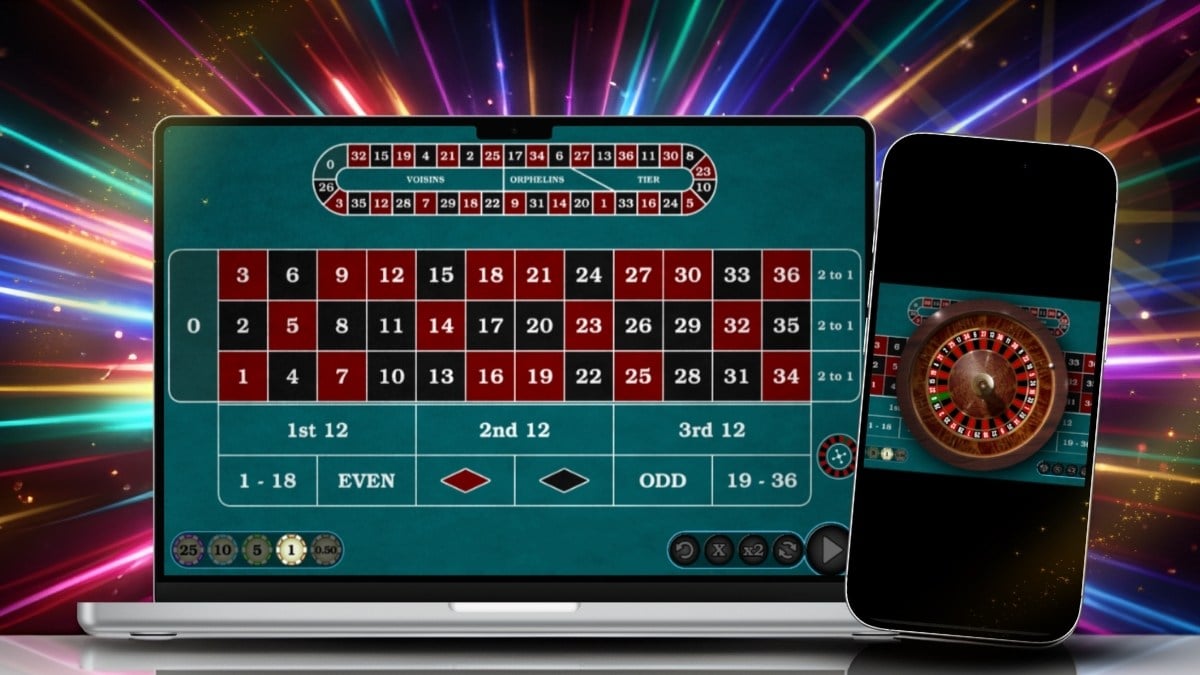

Every bet on a roulette table carries a true probability, but the payouts offered rarely match those odds exactly. But why?
That difference is where the casino builds its edge, and why some bets feel more rewarding than they actually are — and once players grasp how zero or double-zero slots influence outcomes, the choice between inside and outside bets becomes far more strategic.
This guide breaks down every major bet type, explains the edges in European, American, and French variants, and shows how math shapes the game’s rhythm.
True Roulette Odds vs Paid Payouts
Every roulette wager carries two numbers: the true odds of hitting and the payout you’ll actually receive if you win. The gap between them highlights how the house locks in its edge. Take the straight-up bet: in European roulette the chance of landing one number is 1 in 37, yet the casino pays only 35 to 1. The true payout should be 36 to 1, but that shortfall adds up over time.
The same story plays out with splits, streets, corners, and even outside bets. Each offers a reward that looks generous, but it always trails the mathematical probability. This is why roulette stands as one of the clearest examples when comparing different casino game odds. The payouts are designed to reward occasional wins while leaving a long-term advantage for the house.
Why Paid Odds Trail True Odds
Roulette’s payouts look appealing, but they never fully match the underlying probabilities. This gap is where the house makes its money. Consider even-money wagers: in European roulette the true chance of winning red is 18 out of 37, yet the payout is only 1:1. That missing fraction represents the roulette house edge.
The same principle applies across all bets. Whether it’s a corner or a straight-up, the return is always slightly below the fair value. Zeros are the silent drivers here. Without them, payouts would match true probability, and the casino would have no advantage. With one or two zeros on the wheel, expected value shifts in favor of the house, guaranteeing long-term profitability for the operator regardless of short-term swings.
Inside Bets Explained
Inside bets cover specific numbers and clusters, often promising higher payouts at the cost of lower hit rates. Here’s how the most common ones work:
- Straight-up – A single number, paying 35:1 though true odds are 36:1 in European and 37:1 in American.
- Split – Two adjacent numbers, paying 17:1, with a true probability of 2 in 37 or 38.
- Street – A row of three numbers, paying 11:1, with true probability 3 in 37 or 38.
- Corner (or square) – Four numbers, paying 8:1, true probability 4 in 37 or 38.
- Line (double street) – Six numbers, paying 5:1, with true probability 6 in 37 or 38.
Outside Bets and Their Profile
Outside bets cover broader sections of the wheel, offering a steadier rhythm of wins compared to the spiky outcomes of inside bets. Red or black, odd or even, and high or low all fall into this category. These wagers pay 1:1, which means the payout matches your stake, but the chance of hitting is nearly 50 percent—reduced only by the presence of zero.
Dozen and column bets expand the coverage even further, each targeting 12 numbers at once and paying 2:1. The frequency of wins here makes outside bets less volatile, appealing to players who prefer consistency over big swings. Still, they carry the same structural disadvantage: the payout lags behind the true probability. For those studying outside bet odds, the lesson is simple: expect a smoother ride, but accept smaller returns per win.
Roulette House Edge by Variant
The defining factor in roulette is the green zero, which shifts the math in favor of the casino. Add a double zero, and the edge grows sharper. Here’s how the most common variants break down:
- European Roulette (Single Zero): Features 37 numbers (1–36 plus zero). The house edge sits at 2.70%.
- American Roulette (Double Zero): Adds a second zero, raising the total to 38 slots. This change pushes the house edge up to 5.26%.
- French Roulette (Single Zero with La Partage/En Prison): Uses the European wheel but offers special rules on even-money bets. If the ball lands on zero, players lose only half their wager or may keep it imprisoned for the next spin. These rules can cut the edge on even-money bets to about 1.35%.
Understanding the differences between European vs American roulette highlights why players often prefer the single-zero format. Fewer zeros reduce the casino’s edge, while French rules go a step further by softening the impact of unlucky zero results.
Variance in Play: Inside vs Outside Bets
Roulette offers two broad styles of betting, each shaping the tempo of a session differently. Players looking for stability often lean outside, while those chasing bigger spikes test their luck on inside wagers.
Inside Bets and Volatility
Straight-up, split, street, and corner wagers can deliver large payouts, but they hit rarely. This creates long stretches of losses broken by occasional wins. The variance is high, which can lead to short sessions that swing wildly between frustration and exhilaration.
Outside Bets and Steadier Returns
Red/black, odd/even, and high/low offer lower variance. Wins come frequently, but payouts are modest. For players seeking more control over bankroll swings, outside bets provide a smoother ride. Examining roulette probability across these categories shows why table dynamics can feel so different depending on where you place your chips.
Quick Math Examples
Numbers make roulette’s house edge clearer than any abstract explanation. Take a straight-up bet on European roulette: the true chance of hitting is 1 in 37 (2.70%). If the game were perfectly fair, the payout would be 36:1. Instead, the casino pays 35:1. That single unit difference guarantees the operator’s long-term edge.
Even-money wagers show the same pattern. Betting red has an 18/37 chance in European roulette (48.6%). A fair payout would be 1.08:1, yet the game pays only 1:1. The shortfall translates directly into the casino’s advantage.
Even when using niche formats like Bitcoin roulette, the numbers never change—the structure of payouts versus probabilities guarantees the house an edge.
| Bet Type | True Odds (EU) | Paid Payout | Edge Source |
| Straight-up | 36:1 | 35:1 | Zero slot |
| Even-money | 1.08:1 | 1:1 | Zero slot |
| Dozen/Column | 2.16:1 | 2:1 | Zero slot |
Split, Street, and Corner in Practice
The mid-range inside bets—split, street, corner, and line—offer a blend of higher payouts with moderate chances. They illustrate how roulette creates variety while keeping the edge consistent.
Splits and Streets
A split covers two numbers with a chip placed between them. The true odds in European roulette are 18:1, but the payout is 17:1. A street, covering three numbers in a row, has true odds of 12:1 but pays only 11:1. These wagers offer more frequent hits than straight-up bets, but the same built-in disadvantage.
Corners and Lines
Corners cover four adjoining numbers, hitting at true odds of 8.5:1 but paying 8:1. A line, covering six numbers, pays 5:1 against true odds of 6.16:1. These bets are popular with players who want to spread risk while keeping some upside. Understanding split/street/corner odds highlights how the house trims every payout, regardless of the bet size.
Using Tools and Verification
Modern players have access to resources that make understanding roulette simpler. Verifying odds and payouts is important, since online and land-based casinos sometimes present information differently. Here are reliable ways to confirm the math:
- Game help screens – Every licensed online roulette game provides a help or info section showing official payouts.
- Payout charts – Tables posted on-site or in the game lobby summarize house rules and bet returns.
- Independent tools – Using a roulette calculator allows players to cross-check odds, payouts, and expected values instantly.
- Community reviews – Experienced players often share breakdowns and analyses, helping to flag unusual rule variations.
These checks help players spot when rule tweaks—such as altered payout tables or side bets—may shift the balance more in favor of the house.
Roulette in Online and Crypto Casinos
Playing digitally introduces convenience and new variations, but the math remains the same. Whether spinning in a mobile app or streaming a live dealer feed, the odds and payouts follow the same principles outlined in traditional play. What changes is the level of access and transparency, as online platforms typically display odds more clearly than physical tables.
Crypto gaming adds another niche layer. With Bitcoin roulette, players can wager using digital currency, sometimes with provably fair systems that allow independent verification of spin results.
Yet despite the technology, the core mechanics do not shift—payouts still trail true odds, and zeros still drive the house advantage. Players researching the best sites to play online roulette should look for licensed operators that offer clear rule sets, transparent payout tables, and responsible play tools.










Published: Oct 8, 2025 11:42 am