


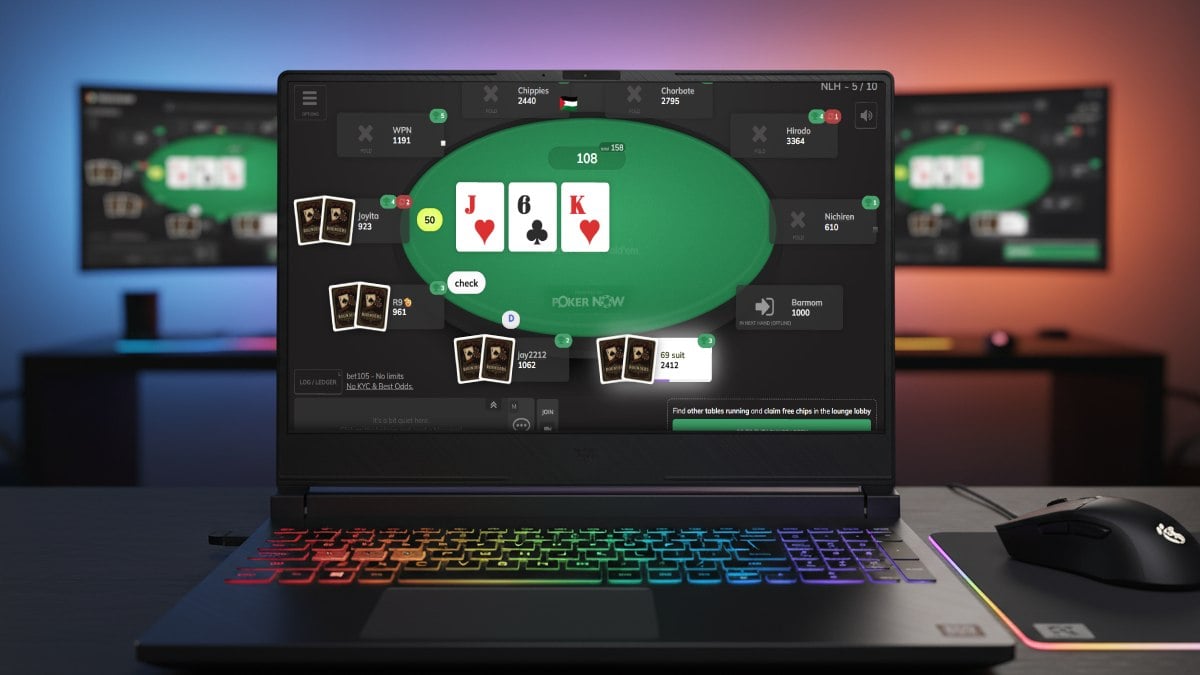

Every poker game depends on the dealer’s control of pace and accuracy — and Texas Hold’em isn’t any different.
Even a single slip can disrupt action or raise disputes, so understanding the proper dealing procedure is as important as knowing the rules themselves.
A dealer’s role is part coordination, part discipline. Once you know the flow of each hand, the mechanics become second nature, allowing the table to focus entirely on play rather than procedure.
Texas Hold’em: All About the Game
Texas Hold’em is the world’s most played poker format. Each hand uses a standard 52-card deck, with players combining two private cards and five shared community cards to form the best possible five-card hand. The game unfolds across four betting rounds: preflop, flop, turn, and river, with each street offering a new chance to bet, check, or fold.
Every deal follows the same order, yet no two hands play out alike. Betting structure varies by format, from fixed-limit to no-limit, which affects how pots grow and how players apply pressure.
The dealer’s precision ties all of this together; smooth transitions between rounds keep the action fair and the focus on decision-making rather than procedure. For players looking to play this incredibly fun type, our list of the best online poker rooms can give you a notion of where to start.
How to Deal Texas Hold’Em: Preflop Setup
The setup phase dictates how every hand begins. The dealer button sits in front of the player acting last on postflop streets. To the left sits the small blind, and next to that, the big blind. These forced bets start the action and seed the pot before any cards are dealt.
Before shuffling, the dealer should verify chip stacks and confirm blind levels. If antes are in play, each player contributes the required amount before the deal begins. This step is common in tournament formats but optional in casual cash games.
The button rotates clockwise after each hand, keeping the structure fair. When players join or leave the table, the button might skip positions to preserve blind order. Once blinds and antes are posted, the deck is ready for shuffle and deal.
Shuffle, Cut, and Deal Two Hole Cards
Proper handling of the deck is the foundation of how to deal Texas hold’em correctly. A clean shuffle removes any suspicion of stacked or marked cards and keeps the game moving at a steady rhythm.
- Shuffle: Mix the cards three times, alternating between riffle and box shuffles. Keep the deck low to the table so players can always see it.
- Cut: Offer the cut to the player on the dealer’s right. Once completed, place the cut card on the bottom of the deck to block accidental exposure.
- Dealing: Start with the small blind and deal one card at a time, face down, moving clockwise. Repeat until every player has two cards. Each card should slide smoothly, landing squarely in front of the recipient without being lifted from the table.
- Card protection: Keep the deck tilted slightly downward when dealing to prevent showing any card edges. After the final card is dealt, place the remaining deck near the dealer area and prepare for the first betting round.
The Burn and Turn Procedure: Flop, Turn, and River
The burn and turn sequence separates amateurs from skilled dealers. The process minimizes the risk of marked or exposed cards influencing play.
At the end of the preflop betting round, the dealer burns one card—removing it face down from the top of the deck—and then turns over three community cards, known as the flop. These cards are placed side by side at the center of the table.
Once flop action finishes, the dealer burns another card before revealing the turn, then repeats the same process for the river. Each step must be deliberate and visible, with no hesitation that could raise questions about fairness.
The burn cards stay face down beside the deck, forming a neat stack, while the community cards remain perfectly aligned in the center for clear visibility to every player.
Handling Misdeals and Exposed Cards
Dealing Texas Hold’em, whether in online poker sites or live, means knowing what to do when things go wrong. A misdeal interrupts the fairness of play, and correcting it quickly helps keep the game running smoothly.
- Wrong number of cards: If a player receives too many or too few hole cards before the first betting action, declare a misdeal and reshuffle.
- Cards exposed during the deal: If one or two cards flash accidentally, finish dealing, then replace only the exposed cards after the deal. If multiple cards show, start the hand over.
- Cards dealt out of turn: Retrieve the misplaced card, return it to the deck, reshuffle, and restart the deal.
- Cards discovered face up in the deck: Treat it as an exposed card, set it aside, and burn it before the next street.
Once any betting has begun, a misdeal can’t be declared. The hand must play out as dealt to maintain fairness for players already invested in the pot.
Managing Action and Order of Play
Track the action in proper sequence. Preflop, the player to the left of the big blind acts first, choosing to call, raise, or fold. The action continues clockwise around the table.
After the flop, the first active player to the dealer’s left begins each betting round. Players act in turn until all bets are matched or all but one fold. In heads-up play, this order changes slightly—the small blind acts first before the flop but last on all remaining streets.
The dealer must monitor both spoken declarations and chip movements. If a player moves chips forward without announcing intent, it counts as a call unless clearly raised in one motion. Consistency here maintains rhythm and prevents disputes while playing poker. The goal is to let betting move at a natural pace, where every player understands when it’s their turn to act.
All-Ins and Side Pots Explained
When players wager everything they have left, the dealer must manage the pot carefully:
- Identify the all-in amount: When a player moves all chips forward, announce “all-in” clearly and confirm the total.
- Create the main pot: This includes only the amount each player can fully match. Anything beyond that forms a side pot.
- Build side pots: If other players still have chips left, separate their extra bets into new pots visible on the table. Each pot is contested only among players who contributed to it.
- Run the board: Once betting ends, deal remaining streets as usual, keeping burn and community cards visible.
- Showdown and payout: Start with the side pots in order of size, then award the main pot last. Count chips aloud for transparency.
For example, if one player goes all-in for 100 chips, a second calls with 200, and a third raises to 400, the main pot is 300 (100 each), and the remaining 300 form a side pot between the second and third players.
Button Movement and Player Changes
The dealer button’s movement defines fairness and flow. After each hand, the button moves one seat to the left, rotating the privilege of acting last postflop. The blinds move along with it, keeping betting positions balanced over time.
When a new player joins mid-orbit, they can’t post as the big blind immediately. Instead, they wait until the button passes, then post both blinds to enter active play. If a player leaves before posting, the dealer can declare a dead button or reposition it to maintain order.
Empty seats between active players may cause dead blinds, but the rotation should never skip more than one position.
In casual home games, players often agree on how to handle seating adjustments, but consistency in applying the rule avoids confusion and maintains the correct action order.
Calling the Clock and Handling Delays
Keeping the game steady is part of how to deal in poker, and that’s why professional dealers in the best online poker casinos always keep track of time. When a player stalls for too long, the dealer or any active player can request a clock. Here’s how it should go:
- Set a time limit: Give the player a fair window, usually 60 seconds, to make a decision.
- Issue a countdown: If no action is taken, start a visible 10-second count before the hand is declared dead.
- Announce decisions clearly: Call “time” out loud so everyone knows the clock is running.
- Stay neutral: The dealer enforces timing without showing bias or frustration.
In home games, the process should be transparent but flexible. A dealer who handles time calls politely helps prevent arguments and keeps the action respectful and efficient.
Table Etiquette and Common Violations
A dealer is also a referee, ensuring good conduct during play. Knowing how to deal texas hold em involves watching for behavior that disrupts the flow or fairness of the game.
String bets must be stopped immediately, allowing only the initial movement. Splashing the pot, or tossing chips directly into the pile, is another violation since it makes counting bets difficult. Cards should stay above the table and never be shown mid-hand except at showdown.
Verbal declarations always take priority over physical action, so if a player says “raise” before moving chips, the bet stands. Dealers should enforce consistency, protect the deck, and keep their hands visible at all times to prevent suspicion.
Splitting Pots and Awarding Odd Chips
Split pots happen when players show equal winning hands. The dealer must divide chips precisely without rushing.
Start by counting the pot into even stacks, sliding them to each winner. If an odd chip remains, award it using the standard rule: the player closest to the left of the dealer button receives it. Some games use suits for tiebreaks, but this depends on house agreement.
All split calculations should be done in full view of the table, using clear verbal cues. Accuracy here matters more than speed since a single misplaced chip can spark unnecessary disputes and slow down the next deal.
Conclusion — How to Deal Texas Hold’em
A good dealer makes every hand run effortlessly. Every shuffle, burn, and turn should feel deliberate and consistent, giving players confidence that the game is being handled properly.
Strong dealing also reduces conflict. When procedures are followed precisely, arguments fade before they start. A steady dealer commands quiet authority without interrupting the natural rhythm of play.
Poker might hinge on luck and skill, but fairness depends on the person moving the cards. A reliable dealer doesn’t chase attention; they earn respect through smooth execution, clear judgment, and absolute consistency hand after hand.








Published: Oct 31, 2025 03:40 am