


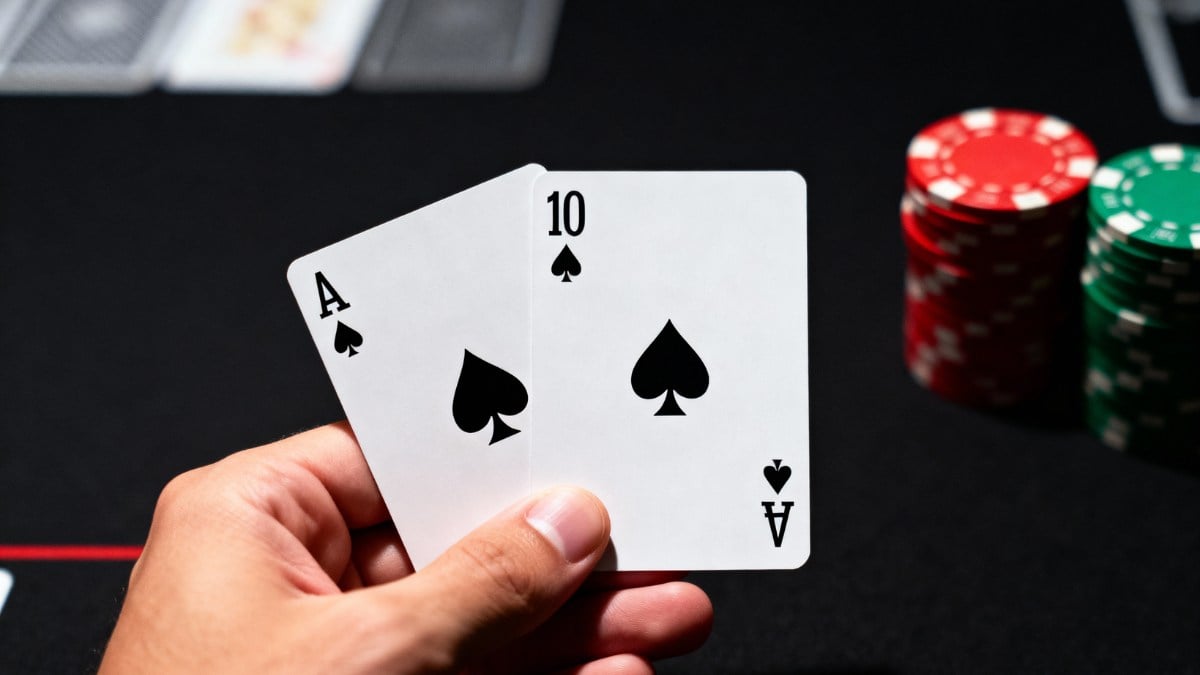

Poker rewards an accurate assessment of the session, not luck or guesswork. That’s why great players calculate everything — all stemming from knowing which hands dominate, which fall behind, and when aggression holds value.
This guide explains the official hierarchy of poker hands, how ties are broken, and how to react strategically when strength shifts between players.
Poker Hands in Order
Poker hand rankings follow a fixed sequence that determines every win, split, or loss. Knowing the order removes uncertainty during play and helps identify the difference between marginal and dominant holdings.
- Royal Flush – Ace through Ten, same suit — this is the top combination.
- Straight Flush – Five consecutive, one suit.
- Four of a Kind – Four cards of equal rank plus any fifth card.
- Full House – Three of one rank and two of another.
- Flush – Five cards of the same suit in any order.
- Straight – Five consecutive cards of mixed suits.
- Three of a Kind – Three cards of one rank and two unmatched cards.
- Two Pair – Two separate pairs plus one unmatched card.
- One Pair – A single matching pair with three unconnected cards.
- High Card – When no combination forms, the highest single card decides.
This structure defines all poker hands in order and clarifies what beats what in poker. A straight always outranks three of a kind, a flush defeats a straight, and full houses beat any lower combination. The royal flush simply represents the top form of a straight flush, not a separate ranking. Memorizing this sequence anchors every poker hands chart used for teaching, training, and online play.
Suits, Kickers, and Ties
Suits carry no rank in most poker formats. Whether hearts, spades, diamonds, or clubs, all hold equal value when evaluating final hands. A flush in spades has the same standing as one in hearts; only card values determine strength. Some local rules or specific variants may use suits for odd tiebreaks, but those cases remain rare.
Tiebreaks depend on kicker cards—the unused side cards that separate two hands of the same type. When players share a pair, the kicker decides the winner by comparing the next-highest card. If both kickers match, the process continues until the fifth card. In community-card games, this often results in “chopped pots,” where players split winnings evenly.
For straights and flushes, the highest-ranking card within the combination decides outcomes. A straight to the King defeats a straight to the Queen, and an Ace-high flush beats all lower flushes. In full houses, the three-of-a-kind portion ranks before the paired portion. Most reputable platforms such as best poker sites display tiebreak rules openly to prevent confusion, standardizing comparisons across their tables.
Hand Selection by Format
Hand strength changes subtly across poker variants. Each game type creates unique dynamics based on the number of hole cards and shared cards available. Recognizing these differences helps determine realistic value before committing chips.
Common Adjustments by Format
- Texas Hold’em – Players form the best five-card hand using any combination of two hole cards and five community cards. Position dictates value more than raw hand rank, making suited connectors and high pairs particularly valuable.
- Omaha – Each player must use exactly two of their four hole cards with three from the board. This rule lowers the relative strength of hands like top pair, while strong draws and full houses appear more frequently.
- Five-Card Draw – Each player receives a complete hand and may exchange cards once. Bluffing plays a larger role since limited information hides most holdings.
- Stud Variants – Cards are revealed in stages, creating visible strength differences between upcards and hidden cards. Reading exposed information becomes part of strategy.
These represent modern types of poker, each requiring adjustments to hand selection and postflop decision-making. The fundamental ranking order stays constant, but context determines whether a hand deserves aggression, caution, or an early fold.
Recognizing the Best Five Cards
In games that use community cards such as Texas Hold’em or Omaha, the objective is always to form the best possible five-card combination. Players must evaluate every available card combination, not just the ones held personally. Using more or fewer than five cards to assess strength leads to frequent misreads and missed opportunities.
In Hold’em, players may use both, one, or none of their hole cards to complete a hand. Omaha restricts this flexibility—exactly two hole cards must combine with three from the board. Knowing which set applies prevents errors during showdowns.
When comparing straights, the Ace can function as both the highest and lowest card. A-2-3-4-5 ranks below 2-3-4-5-6, meaning it is the lowest possible straight. Kickers remain decisive when identical pairs appear, while full houses and flushes rely on rank sequence.
Odds and Frequencies
Probabilities define how rarely strong hands occur, shaping the range of realistic expectations during play. Learning these values provides context for risk and reward, revealing why patience often outperforms impulse.
- Royal Flush – 1 in 649,740
- Straight Flush – 1 in 72,192
- Four of a Kind – 1 in 4,165
- Full House – 1 in 694
- Flush – 1 in 508
- Straight – 1 in 254
- Three of a Kind – 1 in 46
- Two Pair – 1 in 21
- One Pair – 1 in 2.4
- High Card – Common in roughly half of all dealt hands
These frequencies highlight why selective aggression matters. Strong hands appear rarely, and weaker ones dominate most sessions. Tools and charts listed in our list of the best poker sites often include built-in calculators displaying real-time probability. Reviewing those resources before play helps refine realistic expectations about winning poker hands and strengthens analytical consistency over time.
Strategic Reactions: Fold, Call, or Raise
Every hand ranking carries strategic weight. A strong hand might invite aggression, but context—position, stack depth, and opponent tendencies—decides the correct move. Sound play begins with discipline, avoiding emotional reactions and basing choices on relative strength.
Folding protects chips when a hand’s equity drops below expected value. Average holdings lose long-term value against early raises or coordinated boards. Weak top pairs or unpaired high cards often fall into this category.
Calling suits medium-strength holdings that still hold potential but lack clear advantage. It keeps pots smaller and allows later evaluation as community cards reveal more information.
Raising asserts control. The move builds larger pots when holding dominant combinations such as sets, straights, or full houses. It can also force weaker hands to fold and secure immediate returns.
Online and live players follow these same principles, but tempo and data access differ. Those playing in virtual poker rooms often use tracking software and equity tools to refine decision-making, measuring consistency over hundreds of sessions. This analysis transforms tactical adjustments into quantifiable improvement.
Common Myths and Mistakes
Misunderstanding hand rankings creates costly errors. Many stem from long-standing myths that spread among casual players. Correcting them early prevents confusion and wasted chips.
- Believing in “three pair.” A full hand includes only five cards; when three pairs appear, the lower pair automatically loses relevance.
- Ranking suits incorrectly. In nearly all poker games, suits hold equal value unless specified by local house rules.
- Overvaluing small pairs. Low pairs lose significance on coordinated boards or against multiple opponents.
- Ignoring kickers. When two players share the same pair, the kicker determines who wins; overlooking this factor leads to misread showdowns.
- Misreading straights. A-2-3-4-5 is valid but ranks as the lowest possible straight, not a high one.
- Confusing split pots. If all five community cards form the best hand, the result is a shared pot, not an individual victory.
- Assuming higher flush suits win. The card rank, not the suit, determines which flush prevails.
Recognizing these corrections improves judgment and ensures an accurate understanding of poker combinations and the best cards in poker used in each scenario.
Conclusion — Understanding Poker Hands
Poker mastery starts with recognizing precise hand order and applying disciplined reactions. When the structure becomes familiar, decisions align with probability instead of impulse.
Consistent evaluation creates confidence across every variant. Understanding odds, hand interaction, and relative position builds habits that translate directly to long-term performance.
The order of poker hands never changes, but the ability to interpret them correctly separates measured play from random decision-making.







Published: Oct 30, 2025 04:09 am