


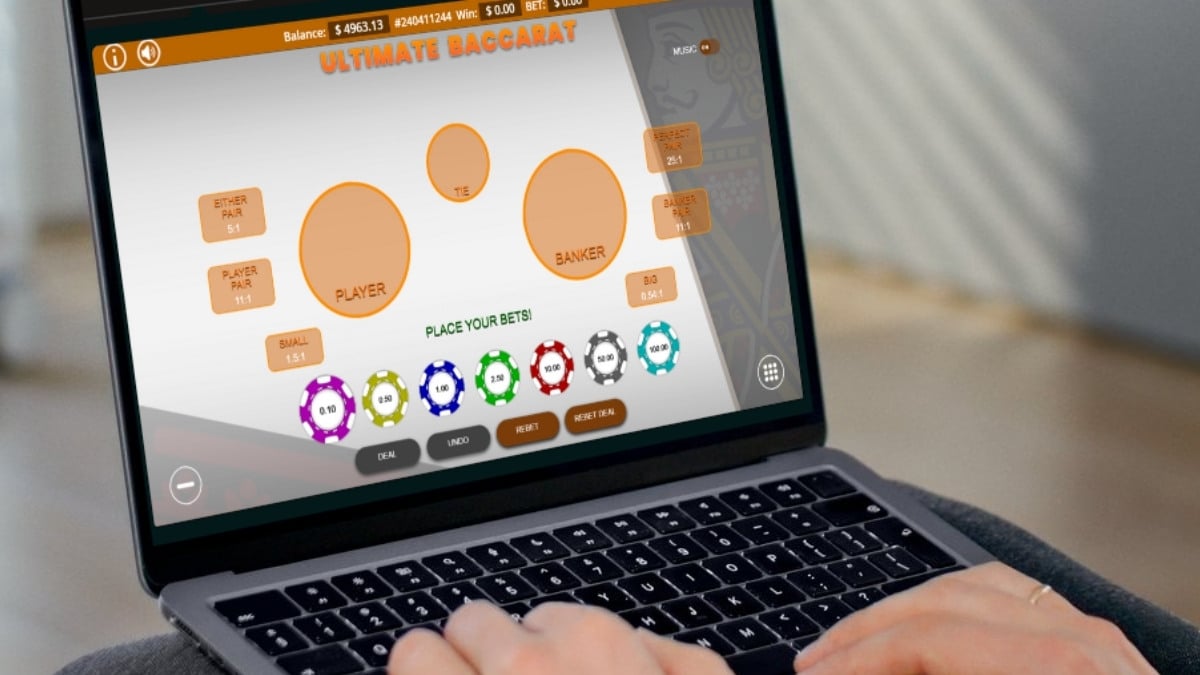

Baccarat is so famous thanks to its balance between simplicity and structure. At first glance, it’s just two hands and a choice of where to bet — but beneath that surface, there’s a structure that even features a wager that holds a statistical edge.
The game has a flow that’s easy to follow, and the foundation is the same whether you’re playing it at a squeeze table in a live lobby or navigating through quick RNG rounds on a phone.
But how exactly to play baccarat? Let’s learn more.
How Hands Score in Baccarat
Scoring in baccarat, be it on a gambling site or on a traditional table, follows one simple rule: totals always reset after nine. Every hand ends with a score between zero and nine, no matter how high the original sum might seem.
Cards from two through nine are worth their face value. Tens, jacks, queens, and kings are counted as zero, while the ace counts as one. To calculate a hand, the values are added together and only the last digit of the total is kept.
For example, a seven paired with an eight adds up to fifteen, which becomes a score of five. A nine combined with a four equals thirteen, giving a score of three.
This method makes every baccarat hand quick to read and easy to compare. The hand closest to nine is the winner, and there are no complicated calculations beyond the simple drop of the tens digit. Remembering that “double digits drop” is the easiest way to make sense of baccarat scoring.
Naturals: The Instant Winners
One of the features that keeps baccarat moving at such a brisk pace is the rule of naturals. A natural is any two-card total of eight or nine. When either the Player or the Banker starts with a natural, the round ends immediately without any further draws.
For example, if the Player’s hand shows a nine and the Banker’s hand adds up to seven, the Player wins right away. If both sides land naturals at the same time, the higher total decides the outcome. A natural nine beats a natural eight, and in the rare case of a tie, the wagers are paid accordingly.
This rule matters because it prevents most hands from reaching the third-card stage. It also highlights how important those opening two cards are. A natural is the fastest route to victory, and it can end a round before players have time to consider what comes next.
The Third-Card Rules Made Simple
Baccarat uses a fixed set of rules to decide when a third card is drawn. Players don’t make these decisions themselves; the flow is automatic. Here’s how it works:
Player’s third-card rule
- If the Player total is 0–5, the Player takes one more card.
- If the Player total is 6 or 7, the Player stands.
- If the Player has 8 or 9, that’s a natural and the hand ends.
Banker’s third-card rule
The Banker’s action depends on both hands. The Banker may stand or draw based on the Player’s total and the value of the Player’s third card. The Banker’s rules are a little more detailed because the Banker acts second.
Example
- Player total = 4 → Player draws.
- Banker total = 5 → Banker looks at the Player’s new card.
- If the Player drew a 7, the Banker stands. If it was anything else, the Banker draws.
The important point is that these rules are fixed and never change. Once you understand that the Player usually acts on 0–5 and the Banker reacts based on both totals, the third-card system becomes much less intimidating.
Core Bets: Banker, Player, and Tie
Every round of baccarat comes down to three possible wagers. Players decide whether to back the Banker hand, the Player hand, or the chance of a Tie;
The Banker Bet
The Banker bet is the most popular choice in baccarat, and for good reason. Thanks to the way third-card rules are structured, the Banker hand has a slight statistical edge. Casinos balance this advantage by charging a small commission, usually 5%, on winning Banker bets. Even with that fee, the house edge sits around 1.06%, making it the most favourable wager on the table.
The Player Bet
The Player bet looks almost the same but comes with a slightly higher house edge, around 1.24%. Unlike the Banker bet, there’s no commission. For many Canadians, this simplicity is appealing: the payout is even money, and you don’t need to factor in deductions. Over many rounds, the difference between Player and Banker outcomes is small but noticeable.
The Tie Bet
The Tie bet pays much more—commonly 8:1 or 9:1—but the odds of it hitting are very low. The house edge on this wager can climb above 14%, which makes it a risky choice. Some players place it for the excitement of a big payout, but it’s generally treated as a side bet rather than a core strategy.
Live Baccarat vs RNG Baccarat
There are two different ways to play in online baccarat casinos. Players can join a live-streamed table with a human dealer, or they can choose a computer-driven version powered by a random number generator. Both options follow the same rules, but the experience feels very different.
Live Baccarat
Live baccarat brings the feel of a land-based casino to your screen. A real dealer runs the game from a studio or casino floor, and players watch through a high-definition stream. Many Canadian sites include “squeeze tables,” where the dealer slowly reveals the cards to build tension. Live baccarat also displays roadmaps such as the Bead Plate or Big Road, which are charts tracking past results. Some players use these to follow patterns, though every round is still independent.
RNG Baccarat
RNG, or random number generator baccarat, is the digital version without a live dealer. The cards are dealt instantly by software, which makes the pace much faster. This format suits players who want quick sessions or who prefer not to wait for other bettors. What it lacks are the squeeze feature and roadmaps, so the experience is more streamlined and less theatrical.
Roadmaps Explained
In live baccarat, players often see grids and charts on the side of the screen. These are called roadmaps, and they record the outcomes of past hands. The most common are the Bead Plate and the Big Road, followed by variations like the Big Eye Boy, Small Road, and Cockroach Pig.
At first glance, these charts look complicated, but they serve a simple purpose: to show a history of wins for the Player, the Banker, or ties. Many Canadians glance at them to look for streaks or patterns. For example, a column of red circles might mark consecutive Banker wins, while blue circles indicate Player wins.
It’s important to remember that each hand of baccarat is independent. The roadmaps don’t change the odds or influence the next round. They’re more of a visual record and, for some, a source of entertainment as they follow trends across the board.
The Pace of Play in Baccarat
One of the reasons baccarat is so popular in Canadian online casinos is its speed. Compared with blackjack or poker, the action moves quickly. Each round usually lasts less than a minute, with only a few decisions made automatically by the third-card rules.
This fast rhythm can make baccarat exciting but also demanding on a bankroll. Dozens of hands can pass in the time it takes for a single poker round. For some players, that pace creates a lively flow; for others, it means losses can add up faster if they’re not paying attention.
Live baccarat tends to be slightly slower than RNG versions, since cards are dealt by hand and players are given time to place bets. Even then, the game remains brisk, keeping momentum high from round to round.
Quick-Start Card for Canadians
For players who want the essentials at a glance, here’s a simple summary of baccarat rules and flow:
- Cards 2–9 = face value
- Ace = 1, 10/J/Q/K = 0
- Totals reset after 9 (only the last digit counts)
- Naturals (8 or 9) end the hand immediately
- Player draws on 0–5, stands on 6–7
- Banker draws or stands based on totals and the Player’s third card
Keeping this outline in mind makes it easier to follow the action at any table. The details of roadmaps, squeeze reveals, or pace of play add flavour, but the fundamentals above never change.
Using Baccarat Rules to Play Smarter
Despite its reputation for being a simple game, baccarat’s rules reveal a great deal of structure — that’s exactly why it’s important to understand what and how you are playing the game.
Fortunately, there are two main different ways that Canadian players can enjoy baccarat. RNG versions provide brief sessions without the ceremony, while live tables set the mood with roadmaps and squeeze reveals. They are based on the same principles and simply reward players who know how points are scored and what each wager means.
So, whether you’re looking forward to playing a few quick rounds or sitting down to a session at a live dealer table, the game is very simple (and fun) to follow once you understand how it works.









Published: Sep 20, 2025 03:29 am