


Crapless Craps is a version of craps where numbers no longer lose automatically on the come-out roll. That rule change removes instant “crap out” results, but it also increases the house edge on the Pass Line from about 1.41 percent in regular craps to roughly 5.38 percent.
The game keeps the same basic dice mechanics, so understanding rules and what they cost over time is the key to deciding when Crapless Craps is worth playing.
What Is Crapless Craps?
Crapless Craps, sometimes called “Never Ever Craps” or “Craps No More,” is a house-approved variant of standard craps. In this version, 2, 3, 11, and 12 no longer cause an automatic loss on the Pass Line. Instead, any of those totals becomes a point, and 7 is the only immediate winner on the come-out roll.
The rest of the structure stays familiar: 4, 5, 6, 8, 9, and 10 can also be established as points, and players still try to hit the point again before rolling a 7.
Layouts usually mirror a regular craps table but extend the point area to cover every number, so wagers on 2, 3, 11, and 12 sit alongside the traditional point boxes.
How to Play Crapless Craps
Learning the flow of Crapless Craps takes only a few minutes, and the game is available in both regulated land-based and online casinos. Players still wager on the Pass Line, a shooter still throws two dice, and the table tracks a point number that must be hit again before a 7 appears.
- Place a Pass Line bet. Buy in, stack chips on the Pass Line, and nominate or accept a shooter.
- Resolve the come-out roll. The shooter rolls two dice. A 7 wins immediately on the Pass Line; any other total (2, 3, 4, 5, 6, 8, 9, 10, 11, or 12) becomes the point.
- Play out the point. The shooter keeps rolling until either the point repeats, which wins Pass Line bets, or a 7 appears, which loses Pass Line bets.
- Add supporting wagers. Once a point is set, players may back the Pass Line with odds, place bets on specific numbers, or use standard options such as Come, Field, and proposition bets as allowed by the layout.
- Cycle to the next round. After the point is resolved, chips are paid or collected, and a new come-out roll starts the next hand with the same structure.
Crapless Craps Odds and Payouts
Pass Line wins in Crapless Craps still pay even money, yet the underlying probability of hitting a point before a 7 drops off compared with regular craps. In standard craps, the Pass Line house edge sits around 1.41 percent; in Crapless Craps, the same wager rises to about 5.38 percent because the new point numbers, especially 2 and 12, are much harder to repeat.
Odds bets behind the line carry their own payout ladders. On many Nevada-style Crapless Craps layouts, odds on 2 and 12 pay 6 to 1, while odds on 3 and 11 pay 3 to 1, reflecting the difficulty of repeating those totals before a 7.
Hardways, Field bets, and proposition wagers usually follow familiar craps ratios, although the extra point numbers mean more combinations play out before a hand ends.
Because Crapless Craps turns rare totals like 2 and 12 into points with relatively high payouts, short-term swings on aggressive betting patterns can be larger than on a basic Pass-and-Place regular craps game, even though the long-run edge is fixed.
Crapless Craps House Edge
Removing losing come-out rolls might sound advantageous, but mathematically it raises the casino’s advantage because more rolls can form difficult point numbers:
| Bet type | Game version | Typical payout* | Approx. house edge** |
| Pass Line | Regular craps | 1 to 1 | ~1.41% |
| Pass Line | Crapless Craps | 1 to 1 | ~5.38% |
| Place 6 or 8 | Crapless Craps | 7 to 6 | ~1.52% |
| Place 5 or 9 | Crapless Craps | 7 to 5 | ~4.0% |
| Place 3 or 11 | Crapless Craps | Often 3 to 1 or similar | ~6.25–6.30% |
| Place 2 or 12 | Crapless Craps | Often 6 to 1 or similar | ~7.14% |
*Exact Crapless Craps payouts can vary by casino; always check the printed layout.
**House edge figures are long-run estimates, not guarantees for any single session.
Note: Percentages and procedures in this table draw on the official rulebook published by the Washington State Gambling Commission in February 2025, alongside house-edge calculations published by Wizard of Odds.
The higher edge comes from how often the toughest points convert. When 2 becomes a point in Crapless Craps, it is made with 1 combination out of 36, while 7 appears with 6 combinations.
After the point is set, the chance to win that hand is 1 out of 7, so only a small fraction of come-out rolls that land on 2 eventually turn into wins. Similar math applies to 3, 11, and 12 and pushes the Pass Line edge to about 5.38 percent instead of 1.41 percent in regular craps.
Crapless Craps Strategy
Crapless Craps strategy starts with accepting that the game runs more expensively than standard craps over long sessions. House edge on the core Pass Line bet more than triples, so a solid plan trims high edge wagers and keeps exposure centered on the strongest parts of the layout.
- Prioritize the lowest edge bets: Keep most of your action on the Pass Line with modest odds and selective place bets on 6 and 8. These options sit at the lower end of the house edge range in Crapless Craps and keep results closer to what you would see on a regular table.
- Treat 2, 3, 11, and 12 as high risk points: Placing 2, 3, 11, or 12 with every shooter invites edges above 6 percent and can shorten a session quickly. Use these bets sparingly, if at all, and recognize that the attractive payouts exist because those points are very hard to repeat before a 7.
- Limit total exposure per shooter: Set a cap on how much you are willing to risk in a single hand cycle. A practical guideline is to keep total active bets for each shooter at roughly 2 to 3 percent of your overall session budget. That keeps the 5.38 percent Pass Line edge and the higher edges on side bets from overwhelming your bankroll.
- Avoid stacking multiple high edge bets on one roll: Combining line action, several place bets, and center-table propositions on the same decision multiplies expected loss. Aim to keep the layout simple, usually with one main line bet plus one or two supporting number bets that you understand well.
- Use free play and simulators to test patterns: Run practice sessions with Crapless Craps simulators or demo games to see how different bet mixes behave over a few hundred decisions. Track how often your chosen structure produces large drawdowns, then tighten stake sizes or remove weaker bets until the swings match what you are comfortable with.
At a 5.38 percent house edge, every 100 dollars cycled through the Pass Line in Crapless Craps carries roughly 5 dollars of expected loss before any side bets are even considered, so trimming high-edge wagers is the only realistic way to slow that cost.
Online Crapless Craps
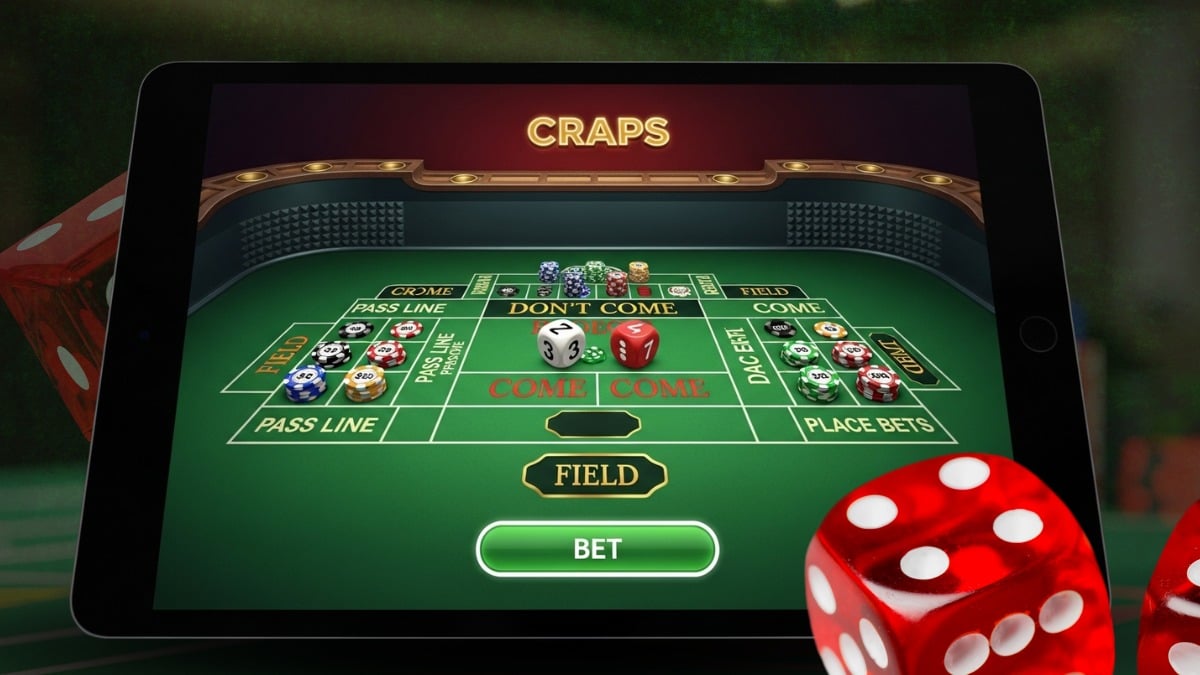
Online casinos have made Crapless Craps easier to find, although it still appears less often than standard craps. Many desktop and mobile platforms list it in their table game sections, sometimes alongside live-dealer versions. The layout usually follows the same structure as the land-based game, with clear spaces for 2, 3, 11, and 12 so players can place point bets on every total.
Random number generator (RNG) versions handle rolls and payouts automatically, with simple chip controls and quick access to rules. These games often offer flexible limits that suit both cautious players and those who prefer higher stakes, and demo modes allow practice with no financial risk. Live-dealer Crapless Craps streams real dice tables from studios, combines digital bet placement with a human dealer, and uses chat tools to keep the format close to a physical pit.
Platforms that support reliable streaming, clear limits, and transparent rules give the best sense of how this variant behaves compared with regular craps.
Choosing Where to Play
Our list of the best online casinos offers the version under their table game sections, some even with live-dealer versions. These sites stand out for stable streaming, fair payout ratios, and secure banking systems. But before picking a site, always do this:
- Check the game catalog. Look for multiple craps variants, including Crapless and regular.
- Review the provider. Games from known developers such as Evolution or Pragmatic Play often deliver smoother experiences.
- Compare betting limits. Platforms that allow flexible minimums suit both conservative and bold players.
- Test demo modes. They help build rhythm before entering live sessions.
- Review bonuses. Some sites attach welcome deals or reload offers to dice games.
Playing Crapless Craps
Crapless Craps changes the usual craps structure by turning every total into a possible point and removing automatic losing come-out numbers. The tradeoff is a higher house edge on the main line bet, driven in part by how rarely points such as 2, 3, 11, and 12 convert before a 7.
Players who already know regular craps can treat Crapless Craps as a higher-cost option that produces longer rounds, not as a safer version of the game. Comparing the house-edge table with standard craps and setting clear limits on stake size and session length helps keep expectations realistic on both online and live tables.
Gambling should be fun. Reach out to the national helpline at 1-800-GAMBLER if you think you have a problem. T&Cs apply (+21).









Published: Nov 24, 2025 04:31 am