


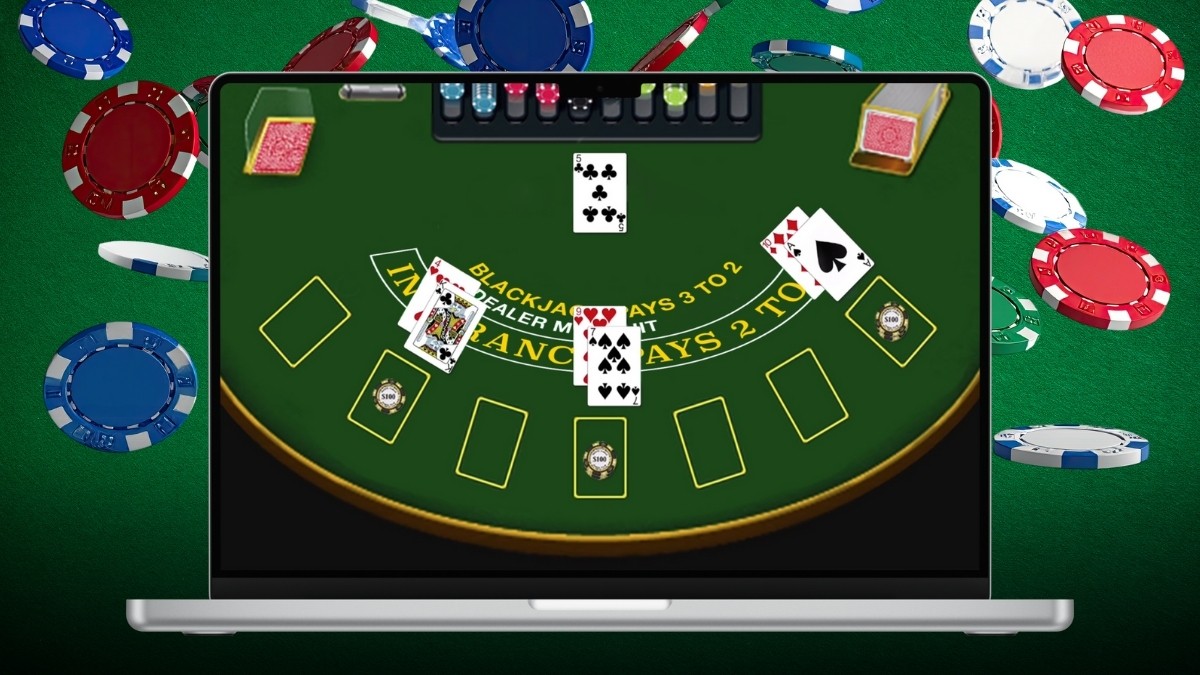

Blackjack outcomes follow predictable mathematical patterns, and each player’s decision shifts expected value based on total, dealer upcard, and rule set. Combinatorial analyses show that some hands gain value through specific actions while others become long-run losing positions unless played precisely.
We break down how card values, dealer requirements, and hand composition interact to create consistent decision patterns that influence which blackjack hands perform strongly over time.
How Blackjack Hands and Card Values Interact
Blackjack hands follow a straightforward point system that turns simple card totals into a defined strategic framework.
Wizard of Odds combinatorial analysis confirms that the distribution of ten-value cards and the fixed nature of dealer hitting rules create predictable expected-value patterns across all common hand types.
Hard Hand vs Soft Hand Blackjack Structure
A hand total is formed by adding card values. Number cards keep their printed value, face cards count as ten, and aces can represent either one or eleven, depending on which total remains at or below twenty-one.
A soft hand contains an ace that can still convert to one if the total would otherwise exceed twenty-one. A hard hand contains no flexible ace and locks the player into a fixed total.
Simulations published by Wizard of Odds also show that soft hands gain long-term value from their ability to take an extra card without crossing 21. For example, soft 18 against a dealer 9 carries a negative expected value, but hitting raises the number of profitable outcomes when the deck contains an above-average proportion of ten-value cards.
Players who want structured environments to practice soft-hand EV decisions often use regulated platforms, including websites where you can play blackjack online for real money, because they provide consistent rulesets and multi-deck settings that reflect standard probability models.
Aces, Bust Rates, and Dealer Requirements
Ace flexibility changes both volatility and expected performance across many hands. A soft 17 behaves differently from a hard 17 because the ace can still shift to one if the total climbs too high.
This allows specific soft totals to absorb an extra card when equivalent hard totals would exceed 21.
Dealers usually follow a fixed rule that requires hitting until reaching at least 17, which gives players a consistent baseline for estimating bust rates and planning responses.
Player Hand Strategies
Player decisions are guided by structured rules that govern every action at the table.
Blackjack hands gain value from consistent probability-based decisions that follow established expected-value ranges, which determine optimal moments to hit, stand, double, split, or surrender.
Reading Totals and Following Basic Strategy Charts
Basic strategy charts provide a clear outline for nearly every situation. These charts rely on millions of simulated rounds that examine how different blackjack hands perform when matched with each dealer upcard.
A total of 16 against a dealer 10 has a low expected value, so many charts recommend hitting despite the risk of pulling a ten-value card. A total of 12 against a dealer 4 often favors standing since the dealer has a stronger chance of busting.
These data-based decisions show that logic outweighs instinct when working toward blackjack-winning hands.
Hard totals follow stricter ranges; hard 13 through 16 against dealer low cards often perform better when players stand, because the dealer has a higher bust percentage with those upcards.
Splitting, Doubling, and Surrendering Under Modern Rules
Pairs add strategic depth. Splitting 8s remains one of the most reliable decisions because a total of 16 ranks near the worst hand in blackjack when played as a single total. Turning that total into two independent hands gives each 8 a better chance to develop into winning hands in blackjack.
Splitting aces also improves outcomes, since any ten-value card creates a strong position. Doubling down works exceptionally well when holding totals that convert efficiently into strong hands, such as 11 against a dealer’s low card, because many cards in the shoe can elevate the hand toward the best blackjack hand.
A 2024 analysis published in Scientific Reports on regulated digital gambling activity found that consistent, rule-based decision-making reduces outcome volatility over time, a principle that aligns directly with blackjack’s expected-value structure.
Dealer Hand Mechanics
Dealer actions follow fixed procedures that shape the entire structure of blackjack hands. Their upcards influence player choices, and their mandatory hit-or-stand rules determine how often each round produces winning hands in blackjack or pushes players toward weaker positions.
Dealer Upcards and Forced Action Patterns
Dealer rules remove discretion and create predictable probability-based decisions that guide player strategy.
Dealers must hit until reaching at least 17, which means low upcards increase the chance of a break while high upcards stabilize dealer totals. A dealer showing a 6 has one of the highest bust rates of any upcard because the path to a made hand requires multiple draws from a position that carries limited flexibility.
Players with medium strength totals often stand in these situations because the dealer’s move sequence supports the development of many winning hands in blackjack.
High dealer upcards create stronger pressure. A dealer 10 forces tighter decision-making because many player totals fall behind the expected final dealer outcome. Situations like a player 16 against a dealer 10 show why certain card combinations can resemble the worst blackjack hand from a risk management standpoint.
Many players analyze dealer sequencing and upcard-based EV ranges through platforms where they can play live dealer online casino games, since these tables maintain fixed rules such as S17 or H17 and allow more accurate tracking of dealer bust frequencies.
How Dealer Outcomes Compare Across Common Rules
Different casinos use rule variations that slightly shift dealer performance. Some require dealers to hit on soft 17, which raises volatility, while others require standing on all 17s, which lowers the likelihood of additional card draws.
These rule differences shift expected value by altering dealer draw frequencies, which changes how often medium-strength player totals convert into winning hands.
Below is a simplified comparison table that captures how rule differences affect dealer behavior in multi-deck formats.
| Dealer Rule Type | House Edge Impact | Bust Rate | Notes |
| Hits Soft 17 (H17) | Raises house edge by ~0.20% | Slightly higher | Dealer draws more often and completes more hands |
| Stands Soft 17 (S17) | Lowers house edge by ~0.20% | Slightly lower | Fewer dealer draws stabilize outcomes |
| Hits Until Hard 17 | Similar to H17 | Moderate | Additional draws increase variance |
| Stands On All 17s | Most stable outcomes | Lower | Reduces multi-card dealer totals |
Understanding these tendencies helps explain why certain player totals succeed more often.
When dealers hit on soft 17, the added draw increases their chance of reaching made hands, which lowers the relative strength of weaker player totals. When dealers stand on all 17s, players gain more opportunities to convert medium strength totals into the best blackjack hand outcomes or limit exposure to what is the worst hand in blackjack.
Special Hand Types and Advantage Situations
Certain hand types gain strength from their structure or from the composition of remaining cards in the shoe.
Soft totals, pairs, and blackjacks carry different levels of flexibility, and these variations determine how blackjack hands develop as conditions change across a session.
Pairs, Soft Totals, and Shifts in Relative Hand Value
Pairs create critical advantage scenarios by turning losing positions into competitive outcomes.
Splitting 8s transforms a total of 16, widely known as one of the most fragile totals and often associated with the worst hand in blackjack, into two separate chances to reach winning hands in blackjack. Splitting aces remains a well-known advantage move because any ten-value card converts the hand into a powerful total.
Soft totals add flexibility since the ace can drop from eleven to one, which allows players to take an additional card without forcing an immediate bust.
This flexibility is the core reason soft totals consistently outperform equivalent hard totals in long-run simulations.
Players interested in volatility modeling sometimes explore popular Bitcoin slots sites, since these games display clear variance curves that help illustrate how risk distribution differs from card-based environments like blackjack.
Blackjacks, Insurance Choices, and Shoe Composition Impact
Blackjack, a natural total of 21 from the first two cards, pays enhanced returns in most formats and ranks near the best hand in blackjack. While it wins automatically in most cases, some tables allow a push when the dealer also has blackjack.
Insurance appears when the dealer shows an ace, functioning as a separate wager on the dealer holding a ten-value hole card, but the expected loss rate exceeds 7 percent in standard multi-deck games. This option rarely benefits players because the probability of a dealer blackjack stays lower than the cost of the wager in many card compositions.
When a shoe becomes rich in low cards, soft totals lose some of their value because hitting yields fewer high-strength finishes. When a shoe contains many ten-value cards, totals like 11 gain strength.
Statistical modeling from Wizard of Odds shows that doubling an 11 against a dealer 6 produces an expected value near +0.67 in favorable shoe compositions. This positions 11 as one of the best hands in blackjack when the deck contains an elevated proportion of ten-value cards.
Monitoring card distribution helps players avoid marginal totals that often resemble the worst hand in blackjack, especially hard 16 against high dealer upcards.
Start Utilizing the Best Blackjack Hands
These factors clarify why hands built around aces, pairs, and strong doubling totals produce the highest long-term expected values, while rigid, medium-strength hard totals create the most exposure to negative outcomes.
Tracking how card composition interacts with EV ranges is what separates the best blackjack hands from the weak positions that often drift toward the worst hand in blackjack.
Always gamble responsibly and only if you are above the legal age in your region.
This article is intended solely for informational and entertainment purposes and is directed at readers 21 years and older. Gambling involves financial risk and can lead to addiction and other serious harms. It is strongly recommended that you set personal spending limits, never gamble to recover losses, and always consider gambling as a form of recreation rather than income. It is your responsibility to confirm that online gambling is legal in your location before participating. If you or someone you know is struggling with gambling, confidential support is available anytime by calling 1‑800‑GAMBLER. More resources: https://www.gamblersanonymous.org/








Published: Nov 26, 2025 05:12 am