


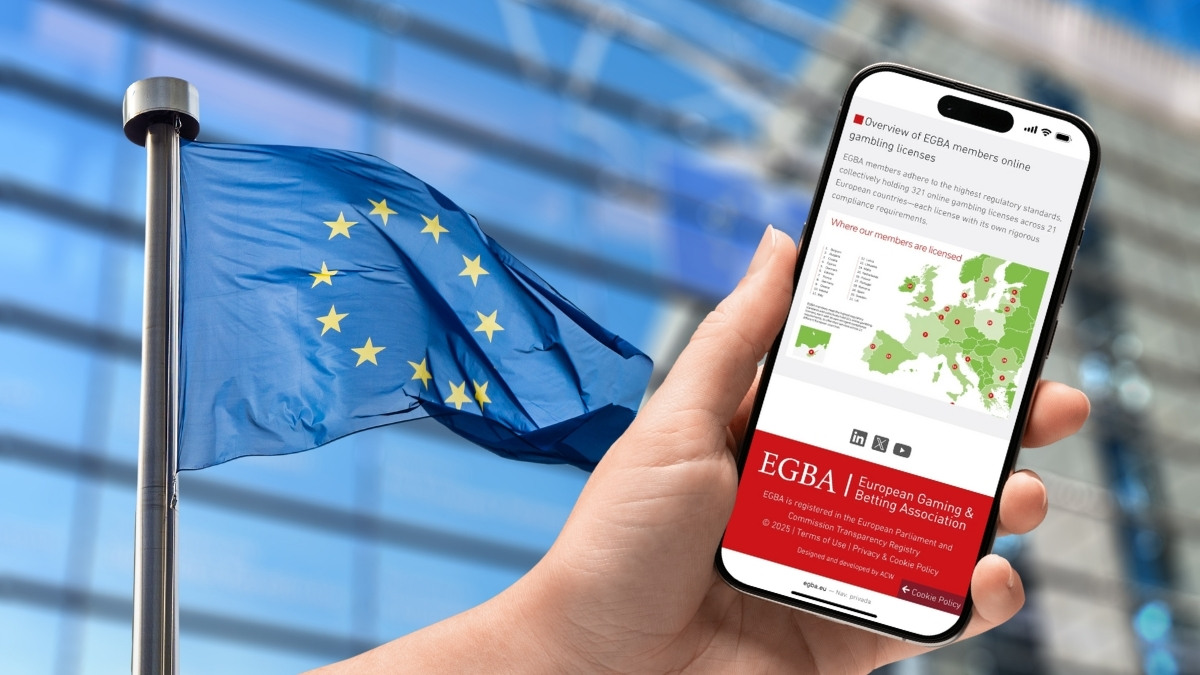

The European Gaming and Betting Association has released new figures highlighting how much the regulated gambling sector contributed to Europe’s economy in 2024.
According to the EGBA report, member operators generated €3.8 billion in tax revenues across 21 European countries, including the EU and the United Kingdom. This figure highlights the growing significance of the betting economy to national budgets, social investments and the future of digital entertainment.
For policymakers and investors, this level of transparency offers more than a financial snapshot. It demonstrates the sector’s commitment to sustainability, consumer safety and community engagement. The EGBA report also provides broader insights into competitive and market dynamics.
Stakeholders, ranging from esports organizations to fintech investors, can expect ripple effects as regulated operators continue to fund public services, grassroots sports and cultural initiatives, while setting new standards for responsible gambling and environmental performance.
The report promises benefits to readers by unpacking how the industry operates, as well as why this matters to the future of gaming and esports betting across Europe.
The Betting Economy at a Glance
The EGBA report emphasizes that €3.8 billion in annual tax contributions is not a marginal figure, a number that is expected to continue to boom over the next nine years. It represents a tangible share of public revenues, fueling services from infrastructure projects to community programs.
This makes the betting economy a crucial partner in the European financial landscape.
Within the publication, EGBA Secretary General Maarten Haijer underlined this point when commenting on the association’s fifth consecutive sustainability report.
“In a year marked by both progress and challenges, EGBA members continue to demonstrate their commitment to sustainable business practices,” he said. “This report—our fifth consecutive annual sustainability report—shows not just where we are, but how far we’ve come and where we’re heading.”
He added, “We publish this report to support transparency and reinforce our culture of social responsibility. It tracks our yearly progress and demonstrates our accountability to all stakeholders.”
The statement conveys a dual message: operators are making significant fiscal contributions while also working to enhance their long-term reputation in Europe’s digital economy.
Tax Revenues as Economic Foundation
The contributions of member operators spanned the European Union and the United Kingdom, encompassing a total of 21 countries. The funds are integrated into public budgets that finance healthcare, transport systems, education initiatives and sports programs at both elite and grassroots levels.
In economies where every euro of revenue matters, €3.8 billion represents not only a vital foundation that secures public services, but also a driver of technological development and wider digital innovation.
This fiscal contribution also serves as clear evidence for policymakers that regulated gambling provides measurable value to society. It shifts the conversation away from viewing the sector solely through the lens of risk and, instead, positions it as an economic partner with a long-term role in Europe’s social and digital growth.
Linking the Betting Economy to Digital Growth
The report situates the betting economy as part of Europe’s wider digital expansion. With the continent’s online gambling European market now representing nearly 40 percent of overall gambling revenues, member operators are positioned as leaders in shaping how digital entertainment develops.
Their investment in technology infrastructure, advanced data analysis, cloud solutions and secure platforms directly connects to sectors such as esports, streaming and online financial systems, reinforcing the overlap between entertainment and fintech.
For industry analysts, the EGBA report highlights how gambling firms are aligning with broader European digital strategies.
From artificial intelligence integration to renewable energy adoption, these companies are establishing themselves as essential players in Europe’s innovation pipeline, where regulated operators are increasingly seen as both financial contributors and technology partners in the continent’s long-term growth.
Why is the EGBA Report Important?
The release of the EGBA report is more than an annual update. It offers a detailed examination of how regulated operators influence Europe’s financial, social and cultural landscapes.
For everyday people, the findings underscore why the betting economy matters beyond balance sheets. For investors and analysts, it highlights how the sector’s growth intersects with sustainability, diversity and consumer protection.
Each area of progress builds trust while signaling the industry’s role in Europe’s long-term digital strategy.
Public Trust
Trust remains the foundation of any regulated betting market, including within the European esports market. The EGBA report demonstrates how operators are working to enhance consumer confidence through the implementation of safer gambling tools, environmental commitments and social responsibility initiatives.
By investing in harm-prevention programs and transparency, operators send a clear signal that they intend to provide secure and fair entertainment experiences.
This effort directly addresses public concerns about the risks associated with gambling. For many players, knowing that companies dedicate resources to safety and accountability makes regulated platforms more attractive than unlicensed alternatives.
In practice, this means that more consumers are likely to remain in safe, regulated environments, where taxes are paid and protections are enforced. That cycle reinforces the legitimacy of the betting economy and supports broader market stability.
Transparency as a Driver of Confidence
Another critical aspect of building trust is the role of transparency. By releasing annual sustainability reports, operators enable both regulators and the public to assess their progress in areas such as consumer protection, workforce diversity and environmental performance.
This openness holds companies accountable while simultaneously establishing a precedent for responsible behavior across the industry. Transparency serves as a bridge between business interests and public confidence, fostering an environment where stakeholders feel that their safety and well-being are prioritized.
For regulators, transparency simplifies oversight and encourages more consistent cooperation with licensed operators. For consumers, it provides reassurance that their experiences are being closely monitored and continually improved.
Together, these efforts contribute to a virtuous cycle in which regulated gambling environments grow stronger, while unlicensed operators lose ground. As long as member operators continue to expand these commitments, public trust in the betting economy can be expected to deepen, reinforcing its role as both an economic engine and a responsible digital industry.
Other Considerations
While tax contributions and safer gambling initiatives dominate headlines, the EGBA report also highlights structural aspects of the industry. Workforce composition, environmental commitments and the balance between regulated and black-market activity are all critical to understanding how the betting economy operates.
These factors influence not only public trust, but also the sector’s reputation with investors and policymakers.
Workforce Demographics
The workforce of EGBA member companies was composed of 57 percent men and 43 percent women in 2024, the same split as the year prior.
While this reflects a more balanced picture than many technology-driven industries, the absence of growth in female representation signals areas for improvement. Investors and regulators are increasingly recognizing workforce diversity as part of a broader set of environmental, social and governance (ESG) standards.
For the betting industry, this means that progress in gender representation could become a significant benchmark in the years to come. A more diverse workforce both enhances corporate culture and supports better decision-making, reflecting a wider range of perspectives that can influence how companies engage with consumers and communities.
Environmental and Energy Metrics
Another important insight from the EGBA report is the sector’s focus on environmental responsibility. Member operators sourced 78 percent of their energy from renewable sources in 2024, a significant increase from 64 percent the previous year. At the same time, overall energy consumption declined by 11 percent.
These figures are not limited to corporate image; they position regulated operators as leaders in ESG compliance, a factor that is increasingly significant to investors and policymakers.
In a global economy where access to capital is often linked to sustainability ratings, gambling companies that embrace greener operations can expect smoother relationships with regulators and financiers.
The emphasis on renewables and efficiency also demonstrates how the betting economy aligns with Europe’s long-term climate goals, further embedding the industry within broader policy frameworks.
Tax Contribution vs. Black Market Losses
The €3.8 billion contribution highlighted in the EGBA report makes a clear case for the value of regulation. However, there is another side to the story. Governments across Europe continue to lose significant tax revenues to unlicensed operators that bypass local laws.
These black-market firms do not contribute to national treasuries, do not support consumer protections and often target vulnerable individuals.
For policymakers, the contrast between regulated and unlicensed contributions is stark. The regulated sector offers measurable benefits that extend beyond tax revenues into safer gambling initiatives and community investments.
When legal operators are restricted too harshly, consumers often migrate to offshore or illegal platforms, leading to reduced public revenues and increased risks for players. The EGBA report highlights this dynamic, reinforcing the argument for balanced, evidence-based regulation that keeps consumers engaged in safer, taxed markets.
Safer Gambling Metrics as a PR Tool
The EGBA report also provides insights into the effectiveness of safer gambling initiatives. In 2024, member operators sent 100 million safety messages to customers, representing a 64 percent increase from 2023. Around 26.7 million customers used safer gambling tools, and 89 percent of staff received training in responsible gambling practices.
While the scale of these initiatives is impressive, the long-term question is whether they deliver measurable results. Reporting raw numbers may not fully capture the impact on player behavior. At the same time, research by Michael Auer and Mark Griffiths has suggested that personalized interventions, such as targeted messages, are more effective than generic reminders.
If operators continue to refine their methods and measure outcomes, the sector can present safer gambling not only as a compliance obligation but also as a proactive contribution to public health. For now, the EGBA report positions these initiatives as a cornerstone of the industry’s social responsibility agenda.
The Structure of Europe’s Betting Economy
The EGBA report is not limited to financial contributions and sustainability metrics. It also outlines how the industry organizes itself, from licensing and compliance to investments in culture and entertainment.
These structural elements help explain how the betting economy fits into Europe’s broader policy and market frameworks.
Licensing and Regulation
EGBA members collectively held 321 online gambling licenses across the European Union and the United Kingdom in 2024. This extensive licensing footprint underscores the reach of regulated operators and their adherence to national and regional frameworks.
Each license represents a level of oversight that ensures operators meet standards on consumer protection, tax contributions and responsible marketing.
The report also underscores the importance of transparency. By publishing a sustainability update for the fifth consecutive year, EGBA demonstrates a long-term commitment to accountability.
Many industries release corporate responsibility statements sporadically, but consistent reporting builds credibility with regulators, investors and the public. It also allows the association to set the narrative, rather than leaving space for critics to define it.
By sharing progress on safer gambling, sustainability, and workforce demographics, EGBA utilizes data-driven storytelling to enhance the sector’s legitimacy.
For analysts, this consistency suggests that gambling companies recognize the value of proactive communication. The transparency not only manages reputational risk, but also creates a foundation for ongoing dialogue with policymakers.
In an era when unregulated operators remain a concern, the licensed sector’s willingness to self-report adds weight to its case for balanced regulation.
Responsible Gambling Efforts
One of the central themes of the EGBA report is the continued focus on safer gambling practices. In 2024, operators sent more than 100 million customer safety messages, representing a 64 percent increase compared to the previous year. These communications included reminders about deposit limits, reality checks and information on support services.
The report also notes that 26.7 million customers engaged with safer gambling tools, demonstrating a growing awareness of and interaction with protective measures.
At the workforce level, 89 percent of staff underwent training in responsible gambling practices, ensuring that employees are equipped to recognize potential risks and guide players toward appropriate resources.
These figures highlight the extent of industry-wide investment in consumer protection.
While questions remain about the measurable impact of some initiatives, the scale alone demonstrates a clear strategic priority. For the betting economy, responsible gambling is a compliance requirement as much as it is a pathway to building trust with both consumers and regulators.
Sports and Cultural Sponsorships as Hidden Impact
Beyond direct tax contributions, the betting economy also exerts influence through sports and cultural sponsorships.
EGBA members collectively invested hundreds of millions of euros in partnerships ranging from professional football clubs to esports tournaments. These funds support broadcasting rights, grassroots programs and community-level events that might otherwise struggle for financial stability.
For esports specifically, betting sponsorships help expand tournament infrastructure, increase prize pools and improve production standards. Viewers benefit from higher-quality streams, professional commentary and immersive event experiences. At the same time, grassroots organizations gain opportunities to expand their reach and develop talent pipelines.
The cultural impact of these investments should not be underestimated. By supporting both mainstream sports and emerging digital competitions, operators embed themselves within Europe’s entertainment ecosystem.
Policymakers weighing the benefits of regulated operators must consider that reducing or restricting these contributions could unintentionally limit funding for sports and culture. The EGBA report highlights this dynamic, positioning sponsorships as a critical but often overlooked element of the industry’s value.
The Bigger Market Context
The EGBA report also situates the betting economy within Europe’s broader digital transformation. Europe’s total gambling market was projected to reach €123.4 billion in gross gaming revenue in 2024, with online platforms accounting for nearly 40 percent of the total.
This shift reflects a change in consumer behavior as players increasingly engage with digital forms of entertainment.
The report positions EGBA members as central to this transition.
By investing in secure platforms, artificial intelligence tools and renewable energy strategies, these companies align themselves with Europe’s innovation agenda. Their activities overlap with sectors such as fintech, streaming and digital consumer goods, making them important actors in the continent’s technological ecosystem.
For stakeholders, the bigger picture is clear. The betting economy is not isolated but rather part of a network of industries shaping Europe’s future. Its contributions go beyond revenue to include technological innovation, sustainability leadership and cultural investment.
The EGBA report presents this broader context as a reminder that the industry’s role extends far beyond the casino floor or sportsbook interface (for those interested in the best online casinos in Europe, these are our top picks).
What Does Europe’s Betting Economy Mean for Gamers?
The EGBA report addresses regulators and investors, as well as the communities that interact with gaming and esports. For gamers, the betting economy plays a role in shaping how events are organized, how content is delivered and how digital safety evolves.
Although the direct connection may not always be apparent, the ripple effects are substantial.
Funding the Ecosystem Gamers Rely On
The betting economy provides critical financial support for sports and esports through sponsorships, streaming rights and grassroots investments. These partnerships enable esports tournaments to expand their prize pools, deliver high-quality production and sustain competitive leagues across Europe.
Players enjoy professional commentary, polished broadcasts and enhanced event experiences as a direct result of this funding.
At the community level, betting sponsorships often stabilize more minor leagues and local competitions. These programs help create pipelines for emerging talent, ensuring that aspiring players have platforms to showcase their skills.
Even for gamers who never place a bet, the entertainment ecosystem they participate in benefits from the financial presence of regulated operators.
Safer Gambling Tech Could Influence Gaming Safety
The tools developed by betting companies to monitor risk behavior may impact digital safety across the broader gaming industry, whether within European leagues or beyond these confines. Features such as personalized alerts, deposit limits and real-time monitoring provide a framework for protecting consumers from harmful patterns related to gambling addiction.
For esports in particular, these systems can help safeguard players as betting becomes more closely integrated with competitions. On a broader scale, the algorithms used to track spending and play behavior could one day be adapted for use in gaming environments, helping to identify unhealthy patterns in areas such as microtransactions or excessive playtime.
Gamers stand to benefit from these innovations, even if they never engage directly with betting platforms.
Gamers Indirectly Pay Through Taxes
The €3.8 billion in tax revenues highlighted in the EGBA report is reinvested into public services, cultural initiatives and community programs. For gamers, this means that regulated betting indirectly supports the infrastructure they rely on.
In some regions, tax revenues may help fund esports facilities, digital literacy initiatives or youth programs focused on technology. At a broader level, governments utilize these revenues to enhance connectivity and online infrastructure, which benefits gamers by providing more stable and affordable internet access.
This indirect cycle demonstrates how the betting economy contributes to the foundations of Europe’s digital ecosystem.
Workforce and Diversity Standards
The gender balance in the gambling workforce, with 57 percent men and 43 percent women, reflects both progress and limitations. For gaming communities that continue to push for greater inclusion, the figures underscore shared challenges across the digital industry.
As regulated operators improve diversity and representation, the impact can extend to esports sponsorships, campaigns and partnerships. Inclusive messaging and programs can influence how gaming culture is represented to broader audiences.
For gamers, the connection between workforce standards and cultural narratives is crucial, as it influences how the industry engages with both players and fans.
The Future of the European Betting Market
The EGBA report illustrates how regulated operators are integrating themselves into Europe’s financial, cultural and digital ecosystems.
With €3.8 billion in tax contributions, hundreds of millions in sponsorships and a rising commitment to sustainability and responsible gambling, the industry has positioned itself as a stable partner in Europe’s long-term growth.
For gamers, the ripple effects include more opportunities to compete, stronger safeguards against harmful play and improved public infrastructure. As Europe’s betting economy continues to expand, its influence on gaming and esports is expected to grow in parallel.
Those interested are encouraged to keep an eye on future updates from EGBA, as these reports provide valuable insights into where the betting economy is heading and what that means for the gaming communities that rely on its support.










Published: Sep 16, 2025 12:40 pm